

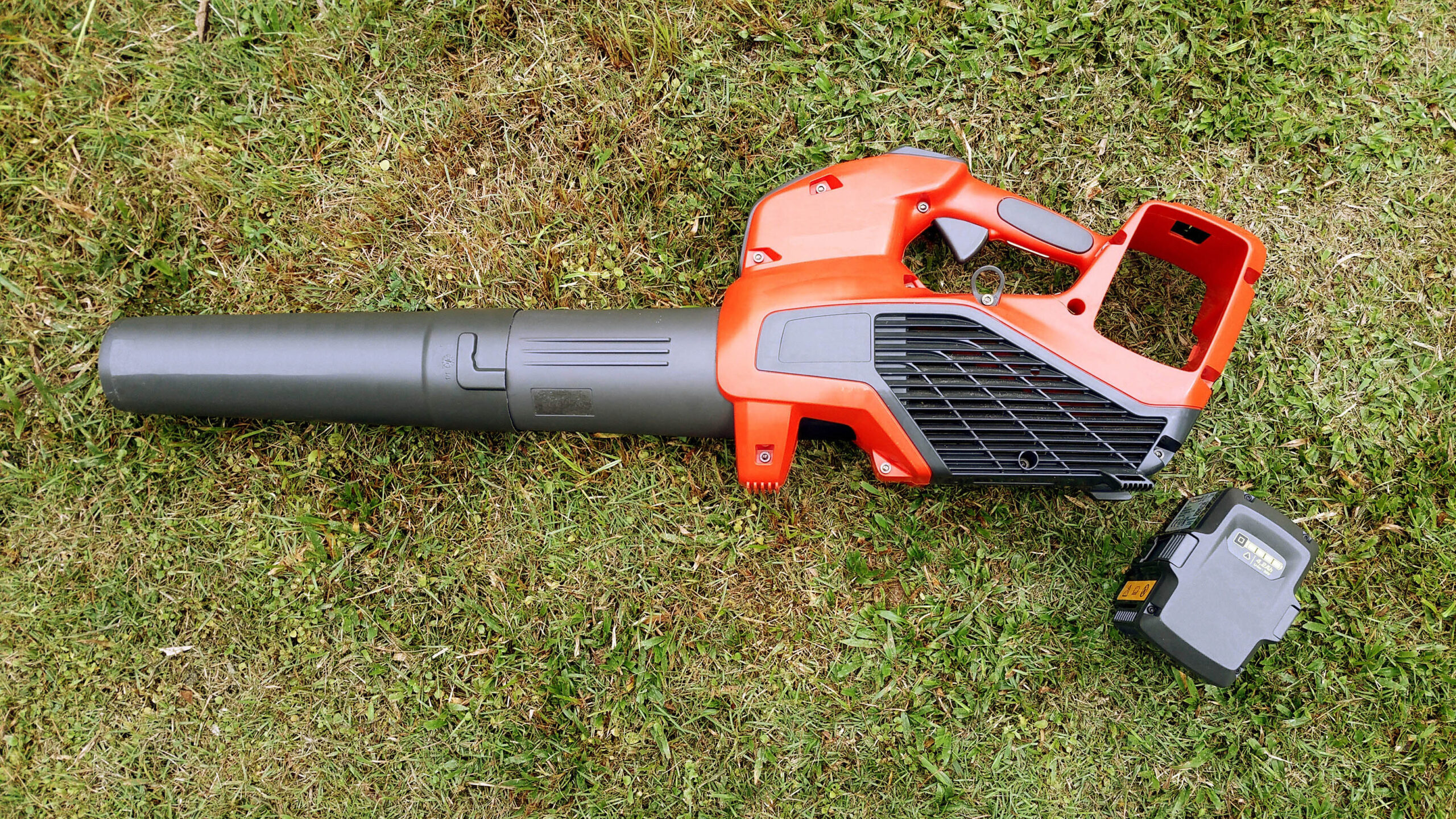
Walk into any home improvement store or browse online listings for a new leaf blower, and you’ll quickly notice two specifications appearing on nearly every model: CFM and MPH. Manufacturers often highlight these numbers as indicators of performance, but they rarely explain what they actually mean—or how they work together. As a result, many homeowners end up comparing numbers instead of choosing the tool that best fits their yard.
After more than a decade of maintaining residential and commercial landscapes, I’ve found that the most effective blower isn’t necessarily the one with the highest advertised airspeed. True cleaning efficiency comes from balancing airflow, velocity, ergonomics, and runtime. If you’re comparing modern leaf blower options, understanding the relationship between CFM and MPH will help you make a far more informed purchasing decision than relying on a single specification.
Organizations such as the Outdoor Power Equipment Institute (OPEI) continue to educate homeowners about selecting outdoor equipment based on real-world applications rather than marketing numbers alone.
Understanding the Difference Between CFM and MPH
Although these terms often appear together, they measure two completely different aspects of performance.
CFM (Cubic Feet per Minute) measures the volume of air a blower moves.
MPH (Miles per Hour) measures how fast that air exits the nozzle.
Think of it this way:
- CFM determines how much material you can move.
- MPH determines how forcefully that material is pushed.
The best-performing blower balances both measurements instead of maximizing only one.
Why Air Volume Often Matters More Than Airspeed
Many buyers assume higher MPH automatically means better cleaning performance.
In practice, that’s rarely the case.
High airspeed works well for:
- Loosening wet leaves
- Clearing debris from cracks
- Dislodging compacted material
However, higher CFM is often more valuable because it moves larger volumes of leaves across open spaces more efficiently.
For clearing an entire lawn, airflow usually has a greater impact on productivity than maximum airspeed.
How Different Yard Conditions Affect the Ideal Performance Balance
Not every landscape requires the same airflow characteristics.
Small patios and decks
Moderate CFM combined with good nozzle control offers precise cleaning without scattering debris too far.
Medium suburban lawns
Balanced airflow and velocity handle dry leaves, grass clippings, and light debris efficiently.
Large properties
Higher CFM becomes increasingly important because moving larger volumes of leaves reduces cleanup time significantly.
Matching the blower to your property’s layout often produces better results than simply choosing the highest advertised specifications.
Comparing CFM and MPH for Common Yard Maintenance Tasks
| Task | CFM Priority | MPH Priority |
| Dry leaf removal | High | Moderate |
| Wet leaves | Moderate | High |
| Grass clippings | High | Moderate |
| Gravel cleanup | Moderate | Moderate |
| Cleaning patios | Moderate | High |
| Large lawn cleanup | Very High | Moderate |
This comparison demonstrates that airflow generally plays a larger role in overall productivity, while airspeed becomes more important for stubborn or compacted debris.
Other Performance Features That Matter Beyond CFM and MPH
Experienced landscapers rarely choose a blower based solely on published specifications.
Other important considerations include:
Brushless motors
These improve efficiency, extend runtime, and automatically adjust power output based on workload.
Variable-speed controls
Different surfaces require different airflow levels.
Cruise control
Maintains consistent airflow during extended cleanup sessions while reducing hand fatigue.
Weight and balance
A lighter, well-balanced blower often outperforms a heavier model simply because it’s easier to use for longer periods.
The U.S. Department of Energy has highlighted brushless motor technology as an important advancement in electric equipment due to its improved energy efficiency and reduced mechanical wear.
Cordless Technology Has Changed Leaf Blower Performance Expectations
Today’s battery-powered blowers have significantly narrowed the performance gap with gas-powered equipment.
Modern cordless models provide:
- Instant startup
- Lower maintenance
- Quieter operation
- Consistent airflow
- Reduced vibration
For residential property maintenance, these advantages often outweigh the limited runtime concerns that once discouraged cordless adoption.
Many homeowners now complete an entire yard cleanup on a single battery charge.
Practical Techniques That Improve Blower Efficiency
The best equipment still depends on proper technique.
For faster cleanup:
- Work with the wind instead of against it.
- Move debris into manageable piles.
- Use lower speeds around mulch and flower beds.
- Increase airflow only when necessary.
- Finish by collecting debris promptly.
These habits reduce unnecessary battery consumption while improving overall cleanup efficiency.
Common Buying Mistakes That Lead to Disappointment
Several misconceptions regularly influence purchasing decisions.
Focusing only on MPH
High airspeed without sufficient airflow often struggles to move large piles of leaves.
Buying oversized equipment
Large commercial blowers may add unnecessary weight for routine residential work.
Ignoring ergonomics
Comfort becomes increasingly important during extended cleanup sessions.
Overlooking battery compatibility
Choosing a blower that shares batteries with other outdoor equipment simplifies ownership while reducing future costs.
The Consumer Product Safety Commission (CPSC) also recommends inspecting blower nozzles, battery connections, switches, and guards before each use while wearing appropriate eye and hearing protection.
A Simple Buying Checklist for Residential Homeowners
Before making your purchase, ask yourself:
- How large is my property?
- Do I mostly clear dry or wet leaves?
- Will I use the blower year-round?
- Do I already own compatible cordless tools?
- Is low noise important in my neighborhood?
These practical questions often provide better guidance than comparing specification sheets alone.
Frequently Asked Questions
What is more important, CFM or MPH?
For most residential yard work, CFM has a greater impact because it determines how much debris can be moved efficiently. MPH becomes more important when loosening wet or compacted material.
Is a higher MPH always better?
No. Extremely high airspeed without sufficient airflow may be less effective than a balanced combination of both measurements.
Are cordless leaf blowers powerful enough?
Yes. Modern brushless cordless blowers provide excellent airflow and runtime for most residential maintenance tasks.
Can one leaf blower handle different cleanup jobs?
Yes. Models with variable-speed controls allow users to adjust airflow for patios, lawns, flower beds, driveways, and hard surfaces.
Final Thoughts
Choosing the right leaf blower requires looking beyond the largest number printed on the box. While MPH measures airspeed and CFM measures airflow, neither specification tells the complete story on its own. The most effective blower combines both in a balanced design that matches your property’s size, the type of debris you typically encounter, and your preferred working style.
When you also consider factors such as brushless motor efficiency, battery compatibility, ergonomics, and variable-speed control, you’ll end up with equipment that performs consistently across a wide range of seasonal cleanup tasks. Rather than chasing the highest specifications, focus on finding the combination of airflow, control, and comfort that makes yard maintenance faster, easier, and more efficient throughout the year.
