

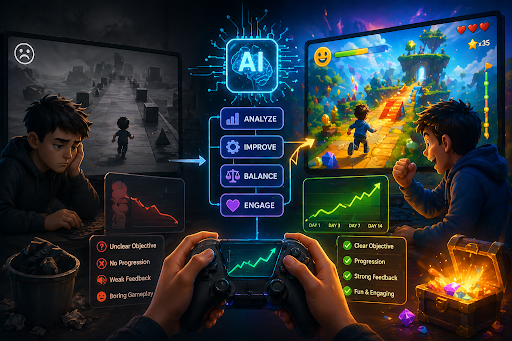
Many creators successfully generate games using AI tools but still struggle with one major issue where the game simply does not feel fun to play. This happens even when the game looks polished and technically complete. The reason is that fun does not come from visuals or structure alone but from how the player experiences movement interaction and feedback during gameplay. If the core actions do not feel satisfying, players lose interest very quickly. Many AI game platforms help you build a game fast but they do not automatically guarantee enjoyable gameplay which means the creator must focus on refining the experience. Making a game fun is about understanding player psychology and improving small details that influence how the game feels moment to moment.
What Actually Makes a Game Fun
A fun game keeps the player engaged through clear actions, meaningful feedback and a sense of progress. Players enjoy games when they feel in control and when their actions lead to visible results. Fun also comes from balance where the game is not too easy or too difficult but offers just enough challenge to keep interest alive. When a game provides continuous interaction and rewards players naturally stay longer. Fun is not a single feature but a combination of smooth gameplay design, responsiveness and progression that works together to create an enjoyable experience.
Why AI Games Often Feel Unfun
AI-generated games often feel unfun because they are built from structure first instead of experience first. The system can generate levels, mechanics and visuals but it cannot automatically understand how enjoyable the interaction feels. This leads to games that technically work but feel repetitive or disconnected. Another reason is lack of tuning because small details like timing, movement speed or feedback intensity are not refined. Without these adjustments, the gameplay feels flat even if everything else is correct. The missing layer is human refinement where the creator improves the experience based on how it feels rather than how it looks.
Improving the Core Gameplay Feel
- Make movement smooth and responsive so actions feel natural
- Ensure every interaction gives immediate and clear feedback
- Remove unnecessary delays that break engagement flow
- Focus on one strong mechanic and polish it deeply
The core gameplay is what determines whether a game feels fun or boring. Even a simple idea can become highly engaging if the interaction feels satisfying. Players stay longer when every action feels connected and responsive which creates a stronger sense of control and enjoyment.
The Importance of Game Feedback
Feedback is one of the most important elements in making a game feel fun because it tells the player that their actions matter. This can be visual effects, sound responses, score changes or even small animations that react to input. Without feedback the game feels empty because actions do not create visible impact. Strong feedback creates satisfaction and keeps players engaged because they feel rewarded for interacting with the system. Even small improvements in feedback can significantly change how enjoyable a game feels.
Creating a Smooth Gameplay Loop
The gameplay loop is the cycle of actions the player repeats throughout the game. If this loop is smooth and rewarding the game feels fun. If it is repetitive or unclear the game feels boring. A strong loop always gives the player something to improve or react to. It should include action feedback and progression so that each cycle feels meaningful. When the loop is well designed players naturally continue playing because the experience feels active and engaging rather than repetitive and static.
Balancing Difficulty for Better Engagement
Difficulty plays a major role in how fun a game feels because it determines whether the player feels challenged or frustrated. If a game is too easy it becomes boring quickly. If it is too hard it feels discouraging. The ideal balance is gradual progression where difficulty increases slowly as the player improves. This creates a sense of achievement and keeps players motivated to continue. Proper difficulty balancing ensures that the game remains engaging over a longer period of time.
Why Simplicity Can Still Be Fun
Simplicity does not reduce fun if the core experience is well designed. In fact many successful games rely on simple mechanics that are polished deeply. The issue is not simplicity itself but lack of refinement. A simple game becomes fun when every interaction feels smooth and rewarding. When players clearly understand what to do and enjoy doing it repeatedly, the game becomes naturally engaging. Complexity is not required for fun but clarity and responsiveness are essential.
Learning from a Simple Game Example
A game like Fightclub how a basic mechanic can remain fun when executed properly. The player avoids obstacles while speed increases gradually, which creates natural tension and engagement. The controls are easy to understand, and the progression feels smooth, which keeps the experience interesting. This shows that fun comes from how well the mechanics are refined rather than how many features the game has. A simple idea can be highly enjoyable if it is designed with care and attention to detail.
Common Reasons Games Feel Unfun
- Weak or repetitive gameplay loop without variation
- Lack of meaningful feedback for player actions
- Poor balance between challenge and ease
- Slow or unresponsive controls that break flow
These problems reduce engagement because they directly affect how the player experiences the game in real time. Fixing them improves enjoyment without needing to add new features or complexity.
Making Your Game More Enjoyable
To make your game more enjoyable you need to focus on how it feels rather than how it looks. Improving responsiveness adding feedback and refining movement can completely change the experience. Players enjoy games that react quickly and make them feel in control. Adding small goals and gradual progression also helps maintain interest. The goal is to create a smooth experience where every interaction feels satisfying and connected which naturally increases enjoyment.
Testing What Feels Fun
Testing is essential because it shows how real players experience your game. You should play your game repeatedly and observe moments where interest drops or engagement increases. Feedback from others is especially valuable because they notice issues that you might overlook. Each testing session should help you identify areas that need improvement. Over time these refinements help transform a basic game into something that feels genuinely fun and engaging to play.
Wrapping Up
Making an AI generated game actually fun to play is not about adding more features but about improving how the game feels during interaction. Fun comes from smooth gameplay clear feedback, balanced difficulty and a strong gameplay loop. When these elements work together, players stay engaged naturally and enjoy the experience. AI tools help create the foundation but the creator must refine the experience to make it enjoyable. By focusing on small improvements and testing regularly you can turn a simple generated game into something that feels responsive engaging and genuinely fun to play over time.
