

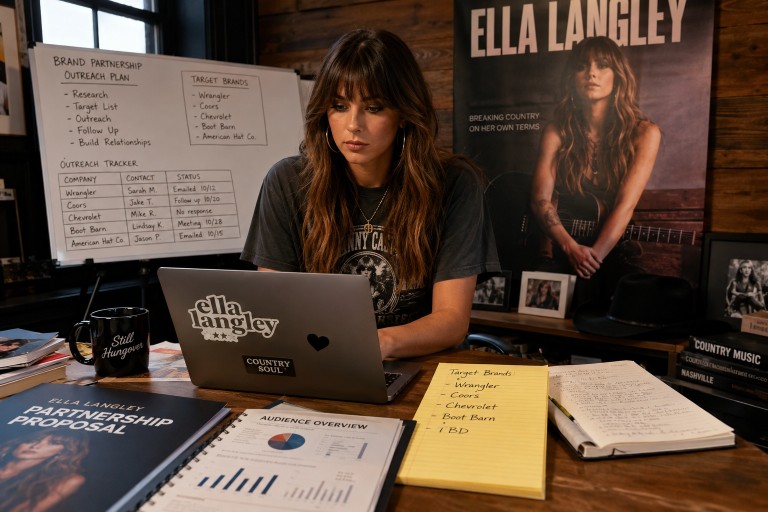
Ella Langley did not walk into a boardroom and ask a Fortune 500 company to sponsor her tour. She earned those conversations through years of consistent work, a loyal audience, and a behind-the-scenes outreach strategy that most fans never see. Understanding how country music artists land brand deals and sponsorships gives you a real look at the business side of a world that feels purely emotional from the outside.
The Real Work Happens Before the Pitch
Before any brand deal conversation takes place, an artist like Ella Langley has to build something worth buying into. That means growing a fanbase that actually engages, developing a clear identity, and showing up consistently on platforms where brands pay attention. Langley spent years playing small bars and venues across the South before Nashville took notice. That grind was not just about music. It was about building proof that she could hold an audience.
Brands look for authenticity, especially in country music where fans are deeply loyal to artists they feel are genuine. When a country artist has that connection, brands in categories like apparel, spirits, automotive, and outdoor lifestyle start paying attention. The pitch becomes much easier when the numbers and the story already do the talking.
How the Outreach Actually Works
The outreach process behind artist-brand partnerships is more systematic than most people imagine. It usually starts with a manager or booking agent identifying target brands that align with the artist’s image. Then comes the research phase, where teams build contact lists of brand marketing directors, partnership managers, and sponsorship leads.
This is where modern tools make a real difference. Teams need verified contact data for decision-makers at companies, not general inquiry emails that disappear into a void. Some teams use tools like the apollo scraper to pull verified contact data from large B2B databases, giving them direct access to the right people at target brands without spending weeks on manual research.
Once the contact list is built, the outreach itself needs to be personal and well-timed. Generic mass emails do not work in this space. A good pitch connects the artist’s audience demographics to the brand’s customer profile and tells a short story about why the partnership makes cultural sense.
What Brands Are Actually Looking For
Sponsorship teams at major brands have specific criteria they evaluate before signing an artist. Some of the most common factors include:
- Audience size and engagement rate across social platforms
- Geographic reach and touring footprint
- Brand safety and public perception
- Alignment with brand values and customer demographics
- Existing media coverage and press momentum
Ella Langley checks several of these boxes in ways that make her attractive to brands in the lifestyle and country music adjacent space. Her rise has been documented across music media, and her audience skews toward a demographic that many brands actively want to reach. That combination of authenticity and reach is exactly what sponsorship teams look for when deciding where to spend their marketing budgets.
Sales Intelligence Tools That Help Teams Move Faster
Artist management teams and music industry agencies that handle multiple clients need efficient ways to research and contact brand partners at scale. Beyond internal databases, many teams turn to sales intelligence platforms that provide rich company and contact data. If you are evaluating options in this space, this review of B2B prospecting tools breaks down how different platforms compare for outreach use cases like this.
The key is not just having contact data but having accurate, up-to-date data. A pitch that lands in the inbox of someone who left the company six months ago is wasted effort. This is why teams invest in tools that refresh their data regularly and allow them to filter by role, company size, and industry before building their outreach list.
The Long Game Behind Every Deal
Most brand deals that look spontaneous from the outside were actually months in the making. An artist’s team might pitch twenty brands before landing one meaningful partnership. Follow-ups, relationship building, and timing all play a role. Sometimes a brand says no in January and comes back in August when their budget cycle resets or a new campaign opens up.
For artists like Ella Langley, the goal is not just landing one-off deals but building long-term brand relationships that feel organic to her audience. A deal that feels forced or out of character can damage trust with fans quickly. The best partnerships are ones where the brand fits naturally into the artist’s lifestyle and the storytelling they already do.
What Emerging Artists Can Learn From This
Emerging country artists who want to attract brand deals should start thinking like a brand themselves early in their career. That means being intentional about visual identity, staying consistent with the values they express publicly, and documenting their audience growth in ways that are easy to present to potential partners.
Building an outreach system before you need it also matters. Knowing who the right contacts are at target brands, having a clean pitch deck ready, and understanding the sponsorship landscape in your genre puts you ahead of artists who wait until they feel famous enough to ask. The artists who land deals early are often the ones who started asking early.
Ella Langley’s rise is a case study in what happens when raw talent meets disciplined execution. The music came first, but the business strategy that followed turned a regional story into a national one. That combination is what makes the behind-the-scenes outreach work in the first place.
