

Overuse injuries develop slowly as time passes. They happen when a joint repeats the same movement too often without enough rest. This constant repetition places continuous stress on the local soft tissues.
The small tendons in your hand are usually vulnerable to this type of strain. Daily tasks like typing and text messaging require hundreds of micro-movements. Each movement creates a tiny amount of friction inside the tendon sheaths.
Irritation begins when your body does not have time to repair this minor wear. The tissues swell and make movement uncomfortable. You may experience pain at the end of a long workday.
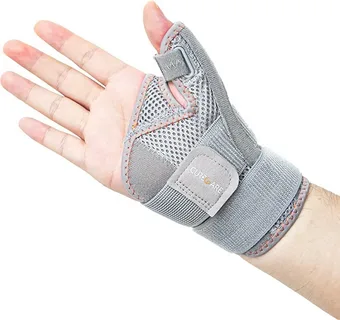
A wrist brace with thumb can help break this cycle of strain. It gives the strained tissues a chance to rest as you go about your day. It provides the stability your wrist and thumb need to start repairing themselves.
Types of Overuse Conditions
Texting Thumb
This modern strain comes from prolonged smartphone usage. The constant thumb scrolling and typing strain the flexor tendons. It causes tenderness near the base of the palm.
Blackberry Thumb/ De Quervain’s tenosynovitis
An older term for a similar issue involving repetitive mobile keypad use. It highlights how long-term reliance on small buttons can fatigue the hand joints.
Worker Wrist Fatigue
This affects individuals who perform repetitive packaging and manual data entry. The continuous wrist flexion strains the extensor muscles of the forearm.
Gamer Hand Strain
Video game enthusiasts usually press buttons at high speeds for hours. This high-velocity movement can irritate the tendon sheaths in both the wrist and the thumb.
How Overuse Affects the Thumb and Wrist
The thumb is basically the most active part of your hand. It opposes the other four fingers to allow for gripping and pinching. This mobility means the base of the thumb experiences high mechanical force. The force travels through the thumb down into the carpal bones when you grip an object tightly. This forms a shared strain pattern across both structures. An injury to the thumb usually coexists with wrist soreness.
Using a thumb wrist brace targets this dual strain pattern directly. It holds your thumb steady and supports your wrist. This prevents the thumb from pulling on the irritated tendons of the wrist. A regular wrist brace leaves the thumb free to move. This can cause you to overuse your thumb to make up for a stiff wrist. It can worsen your discomfort as a result. The thumb wrist brace design addresses both zones simultaneously.
Workplace Ergonomics for Overuse Prevention
A brace is surely a valuable tool. But it should be part of a larger ergonomic plan. Modifying your environment addresses the root triggers of overuse.
- Position your computer keyboard so your wrists do not tilt upwards and downwards. Your forearms should sit parallel to the desk surface. Relax your shoulders to reduce upper body tension.
- Use a mouse that supports the entire palm of your hand. Avoid pinching the mouse tightly between your thumb and pinky finger. Let your hand rest loosely on the device.
- Take a short break every thirty minutes. Remove your wrist support and stretch your fingers out wide. Look away from your screen to relax your body.
Gentle Stretching Routines
Keep your muscles flexible by practising gentle movements when you are not wearing your brace. These exercises help maintain a healthy range of motion.
- The Fan Stretch
- Prayers Stretch
- Wrist flexor and extensor stretch
- Thumb Circles
Avoid These Mistakes
1. Pulling straps too tight
This restricts blood flow and can worsen nerve tingling in your fingers
2. Ignoring finger movement
Ensure your four fingers can move completely free from the edge of the brace fabric
3. Wearing a damp support
Moisture can cause skin irritation and bacterial growth. Air-dry your thumb wrist brace completely before wearing
4. Using the wrong side
Ensure you buy a left-specific or right-specific model if the design is not universal
5. Rushing the recovery process
Overuse injuries normally require a certain gradual time to heal. Be consistent with your care
Conclusion
Your thumb and wrist are exposed to constant strain from activities that you perform on a daily basis. Being mindful when performing daily tasks is not the only necessary thing. A thumb wrist brace is useful as another measure to deal with strain. This support helps stabilize your thumb and wrist. It keeps them steady when you do your routine chores. It may be typing and scrolling over the phone.
Wearing a thumb wrist brace provides the support needed to alleviate pain. It prevents strain and enhances daily performance. A thumb wrist brace is usually recommended when you have a history of both wrist and thumb injury. It helps prevent injury recurrence.
Combine your brace with smart workplace ergonomics and consistent rest periods. This comprehensive approach makes sure your joints remain strong and ready for your daily activities.
