

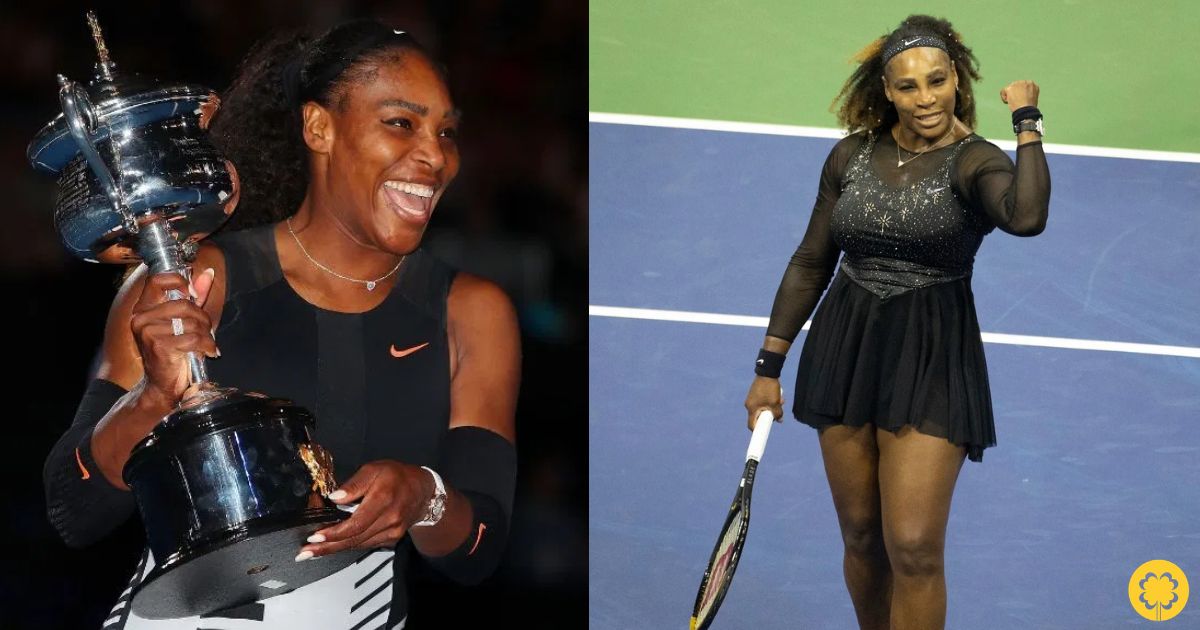
Serena Williams net worth reflects far more than her legendary tennis career. The American champion built a remarkable fortune through tournament winnings, endorsements, investments, and smart business decisions. With 23 Grand Slam singles titles and decades of global recognition, Serena became one of the most influential athletes in modern sports. Her wealth now extends into Serena Ventures, fashion, beauty, media, and sports ownership.
She has also developed valuable partnerships with major international brands while investing in promising businesses. As her career evolved, so did her financial strategy. Today, Serena Williams stands as an investor, entrepreneur, and cultural icon whose income reaches well beyond the tennis court.
Serena Williams Biography at a Glance
| Category | Details |
| Full Name | Serena Jameka Williams |
| Born | September 26, 1981 |
| Birthplace | Saginaw, Michigan, USA |
| Nationality | American |
| Profession | Professional Tennis Player, Entrepreneur, Investor |
| Tennis Career | 1995–2022, with later selective competition |
| Grand Slam Singles Titles | 23 |
| Olympic Gold Medals | 4 |
| WTA Singles Titles | 73 |
| World No. 1 | 319 weeks |
| Husband | Alexis Ohanian |
| Children | Two daughters |
| Investment Firm | Serena Ventures |
| Beauty Brand | WYN Beauty |
| Estimated Net Worth (2026) | $400 million |
| Known For | Tennis, entrepreneurship, investments, fashion, beauty, and philanthropy |
What Is Serena Williams’ Net Worth?

The latest major estimate puts Serena Williams net worth at approximately $400 million in 2026. Forbes lists tennis, endorsements, and self-made business activity among her primary sources of wealth. Its February 2026 profile said Williams had earned nearly $95 million in prize money and remained active with more than a dozen endorsement relationships and Serena Ventures.
However, a net worth estimate isn’t the same as a bank statement. Private investments, company valuations, property values, ownership stakes, taxes, debts, and other financial details aren’t fully public. That means estimates can differ between publications. Still, the broad picture is clear: Williams has built a personal fortune measured in hundreds of millions of dollars. Her total wealth comes from several connected income streams rather than one enormous paycheck.
| Wealth source | How it contributes |
| On-court earnings | Tournament and Grand Slam prize money |
| Off-court earnings | Endorsements, sponsorships, appearances, and licensing |
| Investment income | Startup and private-company investments |
| Business income | Consumer, fashion, beauty, media, and other ventures |
| Sports ownership | Stakes in professional sports organizations |
| Real estate portfolio | Property ownership and potential appreciation |
This is why Serena Williams earnings deserve more attention than salary alone. A tennis player doesn’t receive a traditional yearly salary in the same way an NFL or NBA player does. Instead, income can come from tournament checks, bonuses, appearance opportunities, sponsorships, and business activity. Serena eventually built all of those lanes into one powerful financial ecosystem.
Serena Williams’ Career Earnings, Salary, and Prize Money
The official WTA record lists Serena Williams career prize money at $94,816,730. That makes her the highest-earning female tennis player in official career prize money. Her WTA profile also records 73 singles titles and a 858–156 singles match record.
Those numbers show the extraordinary scale of her Serena Williams tennis earnings. Yet tournament winnings represent only one slice of her financial story. Her Serena Williams tournament winnings came from competing and winning, while her off-court income continued even when she wasn’t holding a racket. That’s an important distinction when calculating Serena Williams career earnings and Serena Williams total earnings.
The biggest prize-money events were the four Grand Slam tournaments: the Australian Open, French Open, Wimbledon, and US Open. Winning these tournaments brought large checks, but their commercial value extended much further. Each championship strengthened her ranking, visibility, reputation, and negotiating power. In other words, a Grand Slam trophy could keep paying long after the final match ended.
Serena Williams WTA prize money also doesn’t capture every tennis-related payment she received. Players can earn from exhibitions, appearance opportunities, bonuses, and other commercial arrangements. Serena Williams appearance fees became particularly relevant because her fame made her a major attraction beyond standard tournament competition. Her on-court earnings created the foundation, while her off-court earnings eventually became the bigger financial engine.
How Much Did Serena Williams Make From Tennis?
Serena made nearly $95 million in official WTA prize money during her playing career. That number alone would place her among the most financially successful athletes in tennis history. Her actual tennis-related financial impact was much larger once sponsorships and commercial opportunities entered the equation.
Her prize money also tells only part of the story because tennis rewards sustained excellence. Serena stayed near the top for years, reached major finals across generations, and continued winning championships well into her 30s. That career longevity gave her more opportunities to collect prize money while keeping her name highly valuable to brands.
Serena Williams’ Endorsements and Sponsorship Deals
Serena Williams endorsements played a huge role in creating her fortune. She became one of the most marketable athletes of her generation because her appeal wasn’t limited to tennis fans. She represented power, resilience, fashion, confidence, and cultural influence. Brands could sell much more than a tennis racket when they partnered with Serena.
Her Serena Williams sponsorship deals have included major companies across sportswear, technology, food and beverages, finance, luxury, travel, and consumer products. Her long relationship with Nike became particularly important. The Serena Williams Nike deal helped establish a partnership that went far beyond placing a logo on her clothing. Nike later honored her by naming the Serena Williams Building at its Oregon headquarters. Her distinctive outfits also helped turn her court appearances into fashion moments.
Over the years, brands including Gatorade, Wilson, Beats, Chase, Lincoln, Audemars Piguet, Delta, IBM, and others have been associated with Williams. These brand partnerships helped create substantial sponsorship income during her peak years. Her commercial value also continued after she stepped away from full-time tennis, showing how powerful a personal brand can become.
That longevity explains why Serena Williams endorsement income remains relevant in 2026. Forbes reported that she still had endorsement relationships with more than a dozen brands in early 2026. Her Serena Williams brand deals now sit alongside her investment and business interests, rather than carrying the entire financial load.
How Much Does Serena Williams Make From Endorsements?
Exact annual endorsement income isn’t publicly disclosed for every contract. Still, Forbes estimates show that Williams continues to generate substantial off-court income even years after her full-time singles career ended.
The bigger lesson is how her brand evolved. Early Serena sold athletic excellence. Modern Serena can represent athletic performance, entrepreneurship, beauty, investing, motherhood, fashion, and women’s empowerment. That wider identity creates more opportunities for licensing deals, endorsements, collaborations, and long-term commercial relationships.
Serena Williams’ Early Life and Introduction to Tennis
Serena Williams early life began in Saginaw, Michigan, where she was born on September 26, 1981. She grew up with her sister Venus and several other siblings. The family later moved to Compton, California, where Richard Williams began training Serena and Venus on public tennis courts. Those early sessions became the starting point for one of sports history’s most remarkable stories.
Richard’s training plan was unconventional and demanding. Serena and Venus learned to compete under pressure while still very young. Their mother, Oracene Price, also played an important role in their development. The family eventually moved to Florida so the sisters could train at a tennis academy. Serena’s upbringing gave her something that money can’t easily buy: years of intense competition before the world knew her name.
Her early experiences also shaped her mentality as a female athlete in a sport that often placed enormous pressure on appearance, behavior, and identity. Serena developed a powerful playing style that challenged traditional expectations of how a top women’s player should move and compete. Her serve, athleticism, and aggressive baseline game became trademarks.
The financial rewards came later. At first, the goal was simply to become good enough to win. That foundation eventually produced a tennis legend whose name became commercially valuable around the world. Her Serena Williams personal life, family background, and early struggles therefore form an important part of the story behind her later financial success.
Serena Williams’ Family and Tennis Training
The Williams family treated tennis as both a craft and a competitive education. Serena trained alongside Venus, which meant she constantly faced a player who was also a future champion. That environment sharpened her instincts and helped create the intense rivalry and partnership that would define their careers.
The sisters’ success wasn’t accidental. It grew from repetition, discipline, family support, and an unusually clear long-term vision. Their journey also showed how difficult it can be to separate athletic achievement from family life when the entire household revolves around competition.
Serena Williams’ Professional Tennis Career and Major Achievements

Serena began her Serena Williams professional career as a teenager and quickly showed that she belonged among elite players. She won her first Grand Slam singles title at the 1999 US Open at age 17. That victory changed her career almost overnight. She wasn’t simply Venus Williams’ younger sister anymore. She had become a champion in her own right.
From there, her record became extraordinary. The WTA lists 23 Grand Slam singles titles, 73 singles titles, and 319 weeks at No. 1. She won seven Australian Opens, three French Opens, seven Wimbledons, and six US Opens.
| Career achievement | Serena Williams’ record |
| Grand Slam singles titles | 23 |
| Australian Open | 7 |
| French Open | 3 |
| Wimbledon | 7 |
| US Open | 6 |
| WTA singles titles | 73 |
| world No. 1 ranking | 319 weeks |
| Olympic gold medals | 4 |
| Grand Slam doubles titles | 14 |
These Serena Williams career achievements also had a direct effect on her earning power. Every major championship increased her visibility. Every comeback added to her story. Every record made her more attractive to brands and investors. Her sporting success became a form of intellectual property, because the Serena name itself gained commercial weight.
The WTA describes her 23 singles majors as the Open Era record for women. It also notes that she spent 319 weeks at the top of the rankings, including a 186-week consecutive run that matched Steffi Graf’s record. That kind of dominance explains why Serena became one of the most valuable names in sport.
Serena Williams’ Biggest Career Achievements
The most striking feature of Serena’s record is its breadth. She didn’t dominate one tournament or one surface. She won major titles on hard courts, grass, and clay. She also succeeded across singles and doubles competition.
Her Grand Slam victories stretched across 18 seasons. That matters because winning once can be extraordinary. Winning across nearly two decades requires adaptability, physical resilience, and an ability to reinvent your game as opponents change.
Serena Williams’ Grand Slam Dominance and Career Comebacks
Serena’s first great period of dominance produced what became known as the “Serena Slam.” After winning the 2002 French Open, Wimbledon, and US Open, she defeated Venus at the 2003 Australian Open to hold all four major singles titles at once. It wasn’t a calendar-year Grand Slam, but it represented a remarkable four-major stretch.
Years later, Serena produced another extraordinary run. She won four straight majors from the 2014 US Open through the 2015 Wimbledon Championships. She then captured the 2017 Australian Open for her 23rd Grand Slam singles title. The WTA records seven Australian Open titles, seven Wimbledon titles, six US Open titles, and three French Open titles.
Her career also included setbacks. Injuries, surgery, health problems, and long periods away from peak form repeatedly interrupted her momentum. Yet she kept returning. The phrase Serena Williams comeback became almost a genre of its own because every setback seemed to create another chapter.
Motherhood added another layer. Serena returned after giving birth to her daughter and reached four more Grand Slam singles finals. Although she didn’t win another major, the comeback itself became a defining part of her legacy. It also strengthened her position as a women’s sports icon whose influence extended far beyond statistics.
Serena Williams’ Second Serena Slam
The second “Serena Slam” showed that her first dominant period wasn’t a historical fluke. She remained capable of winning four consecutive majors more than a decade into her career. That achievement helped redefine expectations around career longevity in women’s tennis.
Her later years also proved that greatness isn’t always measured by trophies alone. Returning after injury, childbirth, and other challenges required a different form of resilience. Serena’s career became a long lesson in adaptation.
Serena and Venus Williams’ Doubles Career
The story of Serena and Venus Williams is unusual because the sisters succeeded as rivals and teammates. Together, they won 14 Grand Slam women’s doubles titles. They also captured three Olympic doubles gold medals in 2000, 2008, and 2012. Serena added an Olympic singles gold medal in 2012, giving her four Serena Williams Olympic gold medals overall.
Their doubles record added another dimension to Serena’s legacy. The sisters understood each other’s movement almost instinctively. They had trained together since childhood, so their communication didn’t always require words. Their athleticism also made them dangerous at the net and from the baseline.
The WTA notes that Serena won 22 of her 23 doubles titles with Venus, with one title coming alongside Alexandra Stevenson. Their partnership became one of the most recognizable examples of sibling success in professional sport.
The financial value of doubles wasn’t the central reason for their partnership. Still, their doubles success increased their visibility and strengthened the larger Williams brand. The Serena Williams doubles titles became another part of a career that was already unusually complete.
Serena and Venus Williams’ Olympic Success
The sisters won Olympic doubles gold together three times. Those victories came in Sydney, Beijing, and London. Serena’s 2012 singles gold completed a rare Olympic achievement across singles and doubles.
Their Olympic success also reinforced the Williams sisters’ broader cultural impact. They weren’t simply two elite tennis players. Together, they became a symbol of family, ambition, resilience, and excellence.
Serena Ventures and Her Business Investments
Perhaps the most important shift in Serena’s financial life came when she moved deeper into investing. Serena Ventures became a central part of her post-tennis strategy. Instead of simply promoting other companies, Serena began taking ownership positions in companies that she believed could grow.
The firm’s focus includes early-stage companies and founders who have historically received less access to venture capital. Serena’s official team page lists her as Managing Partner, reflecting her continuing role in the firm. Her Serena Ventures investments have helped make her identity as an athlete-investor much stronger.
Her portfolio has covered areas such as consumer products, technology, financial services, health, food, and lifestyle. These Serena Williams startup investments work differently from endorsement contracts. An endorsement usually pays for promotion. An equity investment can increase in value if the underlying company grows.
That distinction matters when considering Serena Williams investment portfolio and long-term wealth. Private-company shares can become far more valuable after successful funding rounds or acquisitions. They can also lose value. Venture capital is therefore not guaranteed money. It’s a long game with meaningful risk.
How Serena Ventures Builds Wealth
The biggest financial idea behind Serena Ventures is ownership. Imagine earning $1 million for promoting a company. That’s valuable. Now imagine owning a small piece of a company that eventually becomes worth $1 billion. The potential outcome can be very different.
That is the basic logic behind venture capital and startup investments. Serena has used her visibility, network, and capital to participate in early-stage companies while also supporting founders who may have struggled to access traditional investors. Her move into investing transformed her from an athlete who earned money into an investor who can potentially create value through ownership.
Serena Williams’ Fashion, Beauty, Media, and Other Ventures
Serena’s interests have always extended beyond tennis. Her Serena Williams fashion business developed from the same willingness to challenge expectations that defined her playing career. Her clothing ventures gave her a way to explore design, personal expression, and athletic fashion without depending entirely on another company.
Beauty became another major area. Serena Williams WYN Beauty launched as a performance-focused cosmetics brand designed around movement and active lifestyles. WYN says its formulas are clean, cruelty-free, and designed to move with the wearer. The company also says it developed products with deeper skin tones as a starting point.
That positioning makes sense for Serena’s personal brand. She spent decades performing under intense physical conditions, so the idea of makeup that can keep up with movement fits naturally. The company gives Serena a direct connection with consumers rather than relying only on traditional brand partnerships.
Her Serena Williams media ventures have added another layer. Forbes reported that she launched Nine Two Six Productions in 2023 to expand her work as a producer. She has also worked in television, publishing, and entertainment. These ventures show how her entrepreneurial career has expanded from athletic performance into intellectual property and storytelling.
WYN Beauty and Serena Williams’ Beauty Business
The Serena Williams beauty brand focuses on makeup that can move with the customer. WYN describes its products as high-performing, clean, cruelty-free formulas designed for active daily life.
The business also reflects a broader shift in celebrity entrepreneurship. Instead of lending her name to a product and walking away, Serena has created a company connected to her own story. That’s a much deeper form of brand building.
Serena Williams’ Lifestyle, Assets, and How She Makes Money Today
Modern Serena Williams income doesn’t depend on tournament checks. Her money now comes from a combination of endorsements, investments, business interests, media work, licensing, and ownership. Forbes reported in 2026 that Williams generated about $50 million before taxes and agent fees over the preceding 12 months.
Her Serena Williams real estate interests add another asset category. Over the years, she has owned properties in places including Florida, California, and Paris. These Serena Williams properties have included luxury residences connected with different stages of her career. Real estate can provide both personal use and long-term asset appreciation, although property values and carrying costs can change considerably.
Her Serena Williams luxury lifestyle is therefore only one visible part of a much larger financial picture. Luxury homes and designer clothing attract attention, but privately held investments can matter far more to net worth. A celebrity’s public lifestyle is often the tip of the iceberg.
The same applies to Serena Williams sports ownership. She has participated in ownership groups connected with professional sports, including the Miami Dolphins and Angel City FC. In 2025, she also joined the ownership group of the Toronto Tempo, the WNBA’s first Canadian franchise. The WTA’s 2026 coverage confirms her return to the professional tennis stage in doubles, showing that her relationship with tennis continues even as her business career expands.
| Current wealth driver | Role in Serena’s financial strategy |
| Endorsements | Ongoing sponsorship income |
| Serena Ventures | Venture and investment income |
| WYN Beauty | Consumer business ownership |
| Media ventures | Production and intellectual property |
| Sports ownership | Long-term equity exposure |
| Real estate | Property ownership and potential appreciation |
| Licensing | Monetizing the Serena brand |
Does Serena Williams Still Make Money From Tennis?
Yes, although the answer in 2026 is more complicated than during her peak playing years. Serena stepped away from full-time singles competition after the 2022 US Open, but the WTA announced in June 2026 that she would return to professional tennis at the HSBC Championships in London, with a wild card for doubles.
That development changes the usual meaning of Serena Williams retirement. Her relationship with professional tennis has continued to evolve rather than ending with a clean financial or athletic cutoff. Even outside regular competition, her name remains valuable through endorsements, appearances, media, investments, and the commercial power of her athletic legacy.
Serena Williams’ Net Worth Compared With Other Tennis Legends
Comparing Serena Williams net worth with other tennis legends requires more than looking at tournament checks. Roger Federer, Rafael Nadal, Novak Djokovic, and Venus Williams built wealth through different combinations of prize money, endorsements, investments, and business ventures. Their careers also unfolded in different commercial eras.
Serena’s official prize money remains extraordinary at $94,816,730. Forbes’ 2026 estimate of approximately $400 million in net worth also puts her among the wealthiest athletes to build a fortune primarily through sport.
| Tennis legend | Main wealth drivers |
| Serena Williams | Tennis, endorsements, investing, businesses, ownership |
| Venus Williams | Tennis, endorsements, business, real estate |
| Roger Federer | Tennis, endorsements, investments, business interests |
| Rafael Nadal | Tennis, endorsements, academies, investments |
| Novak Djokovic | Tennis, endorsements, investments, business |
The comparison reveals something important. Career prize money isn’t the same as total wealth. A player can earn $100 million in tournaments but build a much larger fortune through brands and investments. Another player might have a smaller endorsement portfolio but own valuable businesses. Net worth is the final picture after those pieces come together.
Serena Williams vs Venus Williams Net Worth
Serena and Venus started from the same family and shared many of the same professional experiences. Yet their financial paths aren’t identical. Serena’s larger singles trophy haul produced greater prize money, while her later investment strategy expanded into venture capital, beauty, media, and sports ownership.
Venus has also built a successful business career, particularly through architecture, interior design, and other entrepreneurial interests. Their stories show how two athletes can begin from nearly the same starting point and develop different forms of wealth creation.
Serena Williams’ Activism, Philanthropy, and Personal Life
Money is only one part of Serena’s public story. Her Serena Williams activism has addressed racial inequality, gender equality, women’s rights, maternal health, and fairness in sports. She has often used her public platform to challenge double standards that affect women and Black athletes.
Her Serena Williams philanthropic work has included education, community programs, and organizations focused on children and families. Her Serena Williams foundation has supported educational opportunities and other charitable causes. She has also worked with UNICEF and organizations addressing violence, health, and youth development.
These efforts form part of her broader cultural influence. Serena’s career helped expand the idea of what a professional athlete could become. She became an athlete, advocate, founder, producer, investor, and philanthropist without abandoning the identity that made her famous.
Her Serena Williams charity work also connects with her family history. The Yetunde Price Resource Center, named for her late half-sister, focuses on people and communities affected by violence and trauma. That kind of work shows how personal experiences can shape long-term charitable priorities.
Serena Williams Personal Life, Husband, and Daughters
Serena’s Serena Williams personal life has also become part of her public identity. She married Alexis Ohanian, Reddit co-founder and entrepreneur, in 2017. They have two daughters, Olympia and Adira. Serena has often discussed how motherhood changed her priorities and influenced her decision to step away from full-time tennis.
Her Serena Williams husband is also a technology entrepreneur and investor, giving the family a strong connection to the business world. Still, Serena’s personal wealth remains distinct from her husband’s finances. The Serena Williams daughters have also appeared in family moments that Serena has shared publicly, although she generally keeps many private details away from the spotlight.
Motherhood became one of the most important chapters of her later career. Her return to elite tennis after childbirth required extraordinary physical and emotional resilience. It also gave her a new platform to discuss maternal health and the experiences of women after pregnancy.
Conclusion
The story behind Serena Williams net worth is much bigger than a single dollar figure. Forbes’ latest estimate places her wealth at about $400 million, while her official WTA career prize money stands at $94,816,730. Those numbers show the difference between what Serena earned on court and what she built away from it.
Her tennis career created the foundation. Her Serena Williams endorsements, Serena Williams sponsorship deals, and global brand expanded it. Then came Serena Ventures, Serena Williams investments, beauty, fashion, media, real estate, and sports ownership. Each move reduced her dependence on one income source and increased her exposure to long-term business income and investment income.
That may be the most interesting part of her financial journey. Serena didn’t simply earn more money because she won more matches. She learned how to turn attention into opportunity, opportunity into ownership, and ownership into a broader business empire.
Her 23 Grand Slam singles titles, four Olympic gold medals, 73 WTA singles titles, and 319 weeks as world No. 1 created the credibility behind that empire. The trophies opened doors. Serena then built businesses behind those doors.
In 2026, that story is still developing. Her return to professional doubles shows that even the next chapter doesn’t fit neatly into the word retirement. For Serena Williams, the racket created the legacy. Ownership, investing, and entrepreneurship are helping determine what that legacy is worth.
FAQ’s About Serena Williams Net Worth
What is Serena Williams’ net worth in 2026?
Forbes estimates Serena Williams’ net worth at about $400 million as of June 2026.
How much is Serena’s husband worth?
Alexis Ohanian’s exact 2026 net worth is not consistently reported by Forbes, but his Reddit success and investments have made him a very wealthy entrepreneur.
Who is richer, Serena or Venus?
Serena Williams is richer than Venus Williams, with Serena’s estimated fortune around $400 million.
Who is the richest tennis player in the world?
Roger Federer is currently the richest tennis player, with Forbes estimating his 2026 net worth at $1.1 billion.
Who is the richest female tennis player?
Serena Williams is the richest female tennis player, with an estimated $400 million fortune in 2026.
People Also Read: Rihanna Net Worth: How Much Is Rihanna Worth in 2026?

Welcome to Blessings There! I’m the creator and author behind this website. I love sharing useful insights, informative content, and knowledge that can add value to everyday life.