

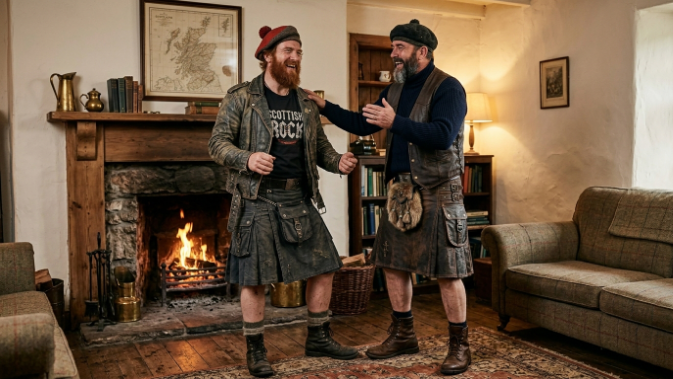
If you’re past the point of considering whether to wear a kilt and into the territory of choosing what kind, you’ve already crossed the harder line. The remaining decision is what kind of statement you want to make every time you put one on.
Two of the strongest options in modern alternative kilt styles are the rock kilt and the leather kilt. They look similar from across a room. They occupy similar shelf space in alternative fashion shops. They’re both bought by men who want something stronger than mainstream menswear can deliver. But they’re built for different lives, hold up differently over time, and signal different things to anyone watching.
This is the buyer’s guide most product pages don’t write — the honest comparison of where each kilt wins, where each one fails, and how to decide which is actually right for your wardrobe in 2026.
What Each Kilt Actually Is
Before the comparison, the basic distinction matters because these terms get used loosely.
A rock kilt is typically a fabric kilt — usually heavy canvas, denim, or wool — designed in dark color palettes with hardware accents (D-rings, chains, sometimes leather trim panels). The aesthetic borrows from rock concert culture, alternative fashion, and modern streetwear. The construction is usually traditional kilt-style: pleated back, apron front, buckle closures.
A leather kilt is built from actual leather — either full-grain cowhide for premium versions or split leather for budget options. The construction can be similar to a fabric kilt (pleated, buckled) or simplified into a structured wrap with D-ring or grommet closures. The aesthetic is bolder, more singular, and reads as a statement piece on its own.
Both fall into the broader “modern alternative kilt” category, but they solve different problems. A rock kilt blends into a wider alternative wardrobe. A leather kilt dominates whatever outfit it’s part of.
The Price Reality
Honest prices for quality versions in 2026:
Rock kilt: $130 to $250 for solid mid-range options. Premium versions with hand-finished hardware and quality leather trim panels run $250 to $400.
Leather kilt: $150 to $400 for genuine cowhide construction. Premium full-grain versions with proper hardware and finishing run $400 to $700.
Below these floors — sub-$120 rock kilts or sub-$150 leather kilts — you’re almost always getting compromised materials. Cheap rock kilts use synthetic canvas that pills within months. Cheap leather kilts use split leather (sometimes called “genuine leather” misleadingly) that cracks and fades within a year.
The price gap between the two is real. A rock kilt and a leather kilt at the same price point are rarely equivalent products. The leather kilt at $200 is usually entry-level; the rock kilt at $200 is usually mid-tier.
A solid mid-range option for either category sits in the $180-$280 range — high enough to get authentic materials and proper construction, not so high you’re paying for prestige.
Durability After 12 Months of Wear
This is where most product reviews skip the truth.
Rock kilt durability:
Heavy canvas rock kilts hold up extremely well to daily wear. The fabric resists abrasion, machine-washes cleanly (usually on cold), and air-dries without losing shape. The hardware — D-rings, chains, buckles — can develop tarnish or wear from friction but usually holds up structurally.
The weakness is leather trim panels (when present). These age unevenly, water-stain easily, and require conditioning to prevent cracking. A rock kilt with leather panels is only as durable as its leather components.
After 12 months of moderate wear (15-25 wears), a quality rock kilt typically shows minor color fading, slight hardware tarnish, and possibly some leather panel staining if exposed to weather.
Leather kilt durability:
Full-grain leather kilts age beautifully when cared for properly. The leather softens with wear, develops a personal patina, and can look better at year three than year one. Quality leather kilts are genuinely lifetime garments.
The weakness is maintenance. Leather requires conditioning every few months to prevent drying. It needs careful storage away from direct sunlight and heat. Spills must be addressed immediately. Get the maintenance wrong and the leather can crack, dry out, or develop permanent damage.
After 12 months of moderate wear, a properly cared-for leather kilt looks better than it did new. A neglected one can look 5 years old.
Verdict: Rock kilts are more forgiving. Leather kilts reward dedication.
Where Each Kilt Actually Belongs
The use-case difference matters more than the construction difference.
Rock kilt strengths:
– Concerts and live music venues
– Alternative bars and pubs
– Festival environments (especially metal, punk, or alternative festivals)
– Casual evening wear with edge
– Daily wear in creative or alternative contexts
– Photography sessions where you want texture and depth
Rock kilt weaknesses:
– Formal events (reads too casual)
– Traditional Scottish events (cultural mismatch)
– Conservative workplaces
– Very hot weather (heavy fabric)
Leather kilt strengths:
– Statement events where you want to be remembered
– Photoshoots and creative projects
– Concerts where leather aesthetic dominates (metal, gothic, alternative)
– Cocktail bars with character
– Fashion-forward creative-industry events
– Date nights at venues with atmosphere
– Cosplay and themed events (where appropriate)
Leather kilt weaknesses:
– Hot, humid weather (leather doesn’t breathe)
– Daily mundane wear (overdressed)
– Most workplaces
– Traditional Scottish events
– Wet weather without immediate drying
For most men, the rock kilt slots into more weeks of the year. The leather kilt earns its place through fewer but more impactful wears.
Comfort Over Long Days
Wearability matters when you’re choosing something to actually live in.
Rock kilt comfort:
Heavy canvas breaks in within a few wears and stays comfortable indefinitely. The fabric breathes reasonably well in moderate temperatures. Hardware can occasionally create minor pressure points if poorly designed, but quality rock kilts position hardware away from contact zones.
A man wearing a quality rock kilt for 8-10 hours typically forgets he’s wearing it within the first hour. It functions as clothing more than statement.
Leather kilt comfort:
New leather kilts are stiff. The break-in period takes 5-15 wears before the leather conforms to body shape. Once broken in, premium leather is remarkably comfortable — it sits like a second skin and moves with the body.
The challenge is climate. Leather doesn’t breathe like fabric. In hot weather above 80°F, leather kilts can become uncomfortable within hours. Cold weather is fine; humid heat is the enemy.
A leather kilt for a 4-hour evening in moderate weather is excellent. A leather kilt for a 10-hour day in summer humidity is punishment.
Styling Each Kilt Properly
How each pairs with the rest of an outfit dramatically affects whether it lands or fails.
Rock kilt styling that works:
– Plain dark T-shirts or fitted long-sleeves
– Henley shirts in heather grey, charcoal, or black
– Modern boots (Chelsea, combat at mid-calf maximum, work boots)
– Simple leather belt over the kilt waistband
– One restrained accessory (silver chain, simple watch)
– Clean grooming — not intentionally messy
A solid rock kilt reads as alternative-modern when paired with restrained streetwear elements. It fails when paired with too many statement pieces — leather harness plus rock kilt plus heavy boots plus chains becomes costume.
Leather kilt styling that works:
– Black T-shirt or fitted black long-sleeve
– Black or charcoal button-down with sleeves rolled
– Leather jacket in moto or simple style
– Mid-calf black boots
– Minimal silver accessories — one ring or one chain, not both
A quality leather kilts already doing significant visual work. The supporting outfit needs to be quieter than the kilt — not louder. Bright colors, busy patterns, or competing leather elements create chaos.
The shared rule: with both kilts, less is more. Pick one or two strong supporting pieces. Skip everything else.
What Goes Wrong With Each (And How to Avoid It)
Common buyer regrets from men who chose poorly:
“I bought a rock kilt and never wear it.“
Usually because their lifestyle doesn’t include enough alternative-context events. A rock kilt for a man who attends 20+ alternative events per year is a bargain. For a man who attends 4 such events per year, it’s overkill.
The fix: be honest about how often you’ll genuinely wear it. Buy the rock kilt when you have the events to wear it to, not because you imagine you’ll someday have those events.
I bought a leather kilt and it feels like costume.
Usually because the man styled it with too many additional alternative pieces, or wore it in contexts where modern menswear was expected. Leather kilts read as costume when paired with leather harness, fingerless gloves, knee-high boots, and intentionally messy grooming. They read as fashion when paired with restrained modern menswear.
The fix: wear the leather kilt with simple, modern supporting pieces. Skip every additional alternative element you’re tempted to add.
My leather kilt cracked after a year.
Usually because of inadequate conditioning, exposure to direct sunlight in storage, or buying split leather instead of full-grain. Quality leather kilts require minimal but consistent maintenance.
The fix: spend $15 on quality leather conditioner. Use it twice a year. Store the kilt away from heat and sunlight. Buy full-grain, not split.
The Hybrid Wardrobe Question
Many men ask whether they need both. Honestly, most don’t.
You only need a rock kilt if your life includes regular alternative-modern contexts (concerts, festivals, alternative venues) but not specifically leather-aesthetic ones. Most utility-meets-alternative wearers are well-served by a rock kilt alone.
You only need a leather kilt if your life includes specifically leather-aesthetic contexts (gothic, metal, leather subculture events) and you want one statement piece for those occasions. A single quality leather kilt covers all your alternative needs.
You need both if your life genuinely includes a wide range of alternative-modern events plus distinct leather-aesthetic events. This is real for some men but not most.
For first-time buyers entering this category, start with whichever fits more events on your actual calendar over the next 12 months. Add the second only after the first proves its place.
Buying Checklist for Either
A few rules apply to both categories:
– Pure materials, not blends marketed as the real thing
– Specified construction (pleated vs. structured wrap)
– Sized to your specific waist, not S/M/L
– Hand-stitched stress points, not just machine-stitched throughout
– Hardware that matches across the piece (no mixed metals)
– Brand or maker with verifiable reviews and clear product specs
– Clear care instructions provided
Anything missing these basics is probably compromised regardless of price.
Frequently Asked Questions
Q:Are rock kilts and leather kilts considered “real” Scottish kilts?**
No. Both are modern alternative kilt categories, not heritage Scottish wear. Don’t wear them to traditional Scottish events.
Q:Can I wear either to a regular wedding?
Generally no, unless it’s an alternative-themed wedding or you’re explicitly invited as a guest with permission to dress alternatively. Traditional wedding attire is usually expected.
Q:Which kilt photographs better?
Both photograph well in their proper contexts. Leather kilts have more visual drama in single shots. Rock kilts photograph better in series and movement-oriented shots.
Q:Can I machine-wash either?
Most quality rock kilts: yes, on cold. Leather kilts: never. Spot-clean leather only and condition regularly.
Q:Do these kilts work in summer?
Rock kilts handle moderate summer heat. Leather kilts struggle above 80°F humidity. For genuinely hot climates, lighter alternatives are better.
Q:Do I need underwear with these kilts?
For modern daily wear, yes — compression shorts or boxer briefs. The traditional “regimental” approach is impractical for daily life and especially impractical for venues with public seating.
—
The rock kilt is the better choice for most men entering alternative kilt wear in 2026 — more versatile, more durable, more forgiving. The leather kilt is the better choice for men who specifically want a statement piece for impactful occasions and don’t mind the maintenance. Decide based on your actual calendar, not the version of yourself you imagine. Either way, you’ll never have to pretend jeans are interesting again.
