

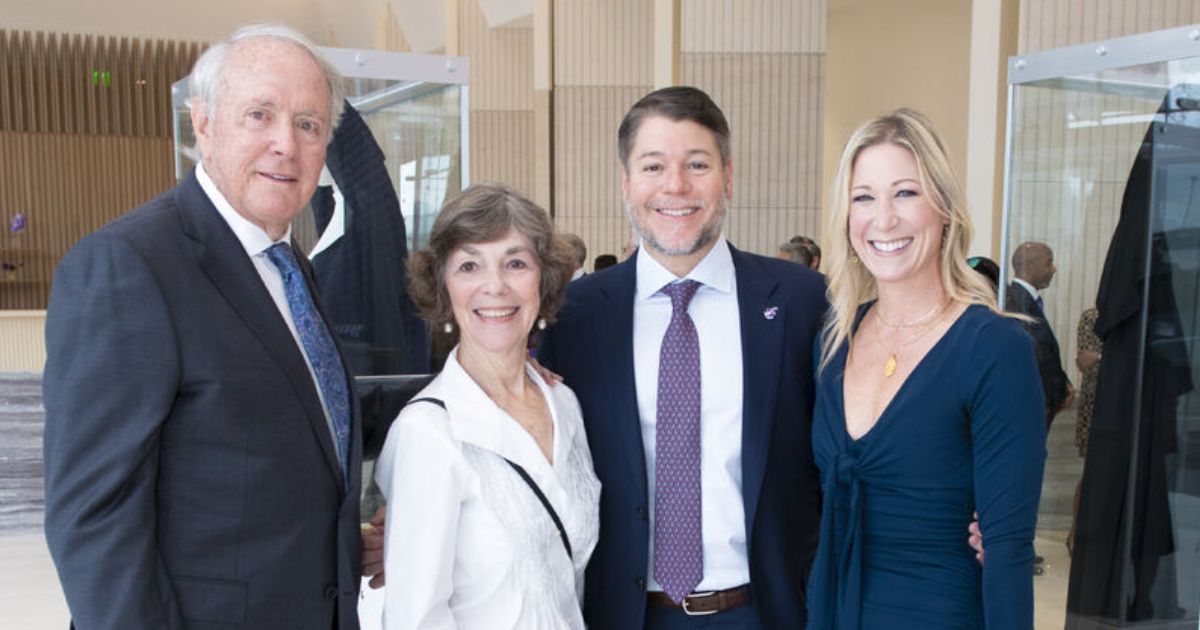
A healthcare executive with nearly two decades of experience at CHRISTUS Health, Paul Generale has held roles spanning both chief operating and chief financial officer responsibilities, offering a unique perspective on executive leadership within large health systems. Currently serving as executive vice president and chief strategy and network officer, Paul Generale oversees acquisitions, network development, and strategic planning for an organization with over 350 facilities and more than 47,500 employees. His academic preparation includes business administration degrees from Baylor University and the University of Houston, Clear Lake. He is a fellow of the American College of Health Care Executives, a member of the Health Care Financial Management Association, and has been recognized among the Top 150 Healthcare CFOs in America.
The chief financial officer (CFO) and chief operating officer (COO) stand as two of the most influential figures in the C-suite. While both serve as essential pillars of support for the chief executive officer (CEO), they drive organizational success from entirely different angles.
Typically serving as the second-in-command, the COO reports straight to the CEO and anchors the company’s daily activities. Their mandate centers on execution — overseeing product manufacturing, service delivery, team structuring, and the practical implementation of high-level strategies. In many organizations, the COO actively collaborates with the CEO to design business strategies, taking on the responsibility of converting those visions into measurable, real-world outcomes.
Consequently, when operational bottlenecks surface, customer satisfaction dips, or revenue targets fall short, the COO is generally the first leader expected to provide answers. Ultimately, this position is designed to distribute leadership responsibilities, especially within large or complex enterprises where managing every operational detail alone is impossible for a CEO.
Because of their comprehensive view of the business, COOs act as vital advisors to the CEO and the broader executive team, including the CFO. Their intimate understanding of daily operations offers a realistic perspective on how new ventures, such as product rollouts, structural reorganizations, or budget cuts, will ripple through staffing, supply chains, and customer support.
Conversely, the CFO operates as the company’s financial custodian. This executive directs the entire lifecycle of capital — monitoring income, governing expenditures, guiding investments, and mitigating fiscal risk. Their daily focus spans financial forecasting, budgeting, capital allocation, regulatory compliance, and performance reporting.
Beyond internal management, CFOs articulate the company’s financial health to external investors, secure funding from banking institutions, and advise the board on major moves like mergers, acquisitions, and geographic expansions.
The journey to the CFO seat traditionally begins in technical finance roles, such as auditing, financial analysis, or corporate controllership. These positions build deep expertise in accounting principles, compliance, and financial modeling. A formal education in business, finance, or accounting is standard, and many top CFOs reinforce their strategic credibility by earning credentials like the certified public accountant (CPA) or Chartered Financial Analyst (CFA) designations.
To put it simply, the COO manages the business engine, while the CFO fuels it. Both positions serve as excellent launchpads for the CEO role, though each brings a different advantage to the table. Historically, COOs have held a slight edge due to their broad organizational oversight and deep operational roots.
Industry data underlines this trend, showing that 57 percent of newly appointed CEOs in the S&P 1500 stepped directly out of a COO or president role. High-profile transitions, like Vimal Kapur at Honeywell or Greg Peters at Netflix, highlight how smoothly operational leaders can step into the top spot.
That said, modern CFOs are becoming increasingly formidable contenders for the chief executive position for several key reasons. First, the scope of the modern finance chief has expanded well beyond balancing the books. Today’s CFOs leverage advanced data analytics, engineer growth strategies, and make pivotal choices that actively drive business performance.
Additionally, their frequent communication with analysts, shareholders, and regulatory agencies gives them a deep understanding of public perception and market expectations, which is a massive asset for high-growth or publicly traded enterprises. CFOs also often hold the purse strings for massive digital transformation initiatives, giving them direct experience leading corporate agility and technological innovation.
Finally, because they supervise compliance and risk mitigation, CFOs are uniquely equipped to steer organizations through economic volatility or unexpected crises. This is precisely why boards frequently turn to financial leaders to become CEOs when navigating turbulent market conditions.
About Paul Generale
Paul Generale is the executive vice president and chief strategy and network officer of CHRISTUS Health, a Dallas, Texas-based nonprofit health system with over 350 facilities and more than $6 billion in assets. With nearly two decades of executive leadership in healthcare finance and operations, he has served as chief operating and financial officer, interim CFO, and senior vice president of financial operations. A fellow of the American College of Health Care Executives, he holds business administration degrees from Baylor University and the University of Houston, Clear Lake.
People Also Read: Scissor Lift Rental: A Smart Solution for Safe, Efficient, and Flexible Elevated Work

Welcome to Blessings There! I’m the creator and author behind this website. I love sharing useful insights, informative content, and knowledge that can add value to everyday life.