

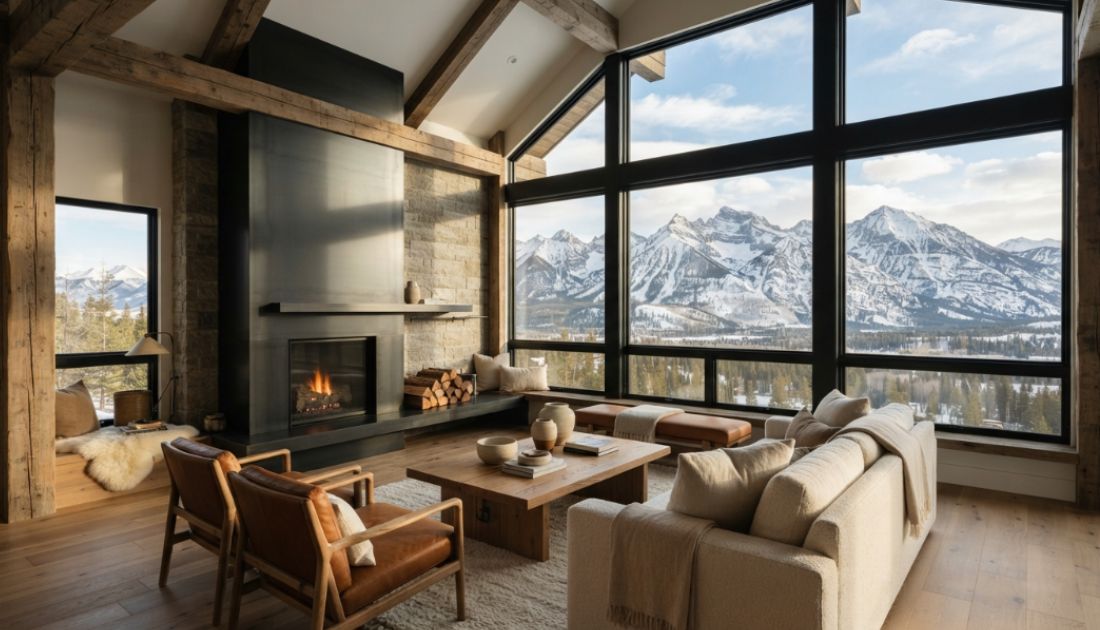
The mountain home design used to mean high elevation, timber walls, and a fireplace built to create warmth. Today, it’s one of the fastest-growing influences in residential design. According to Fixr’s 2026 Interior Design Trends Report, 56% of interior designers identified wellness-focused interiors as the year’s defining trend. This shift is being heavily driven by natural materials, biophilic design, and modern heritage.
Those same principles are helping the mountain look spread far beyond ski towns. From California to Tennessee, mountain-inspired homes now bring the warmth and comfort of alpine living into almost any setting.
From Alpine Peaks to Suburbia: The Shift Toward Warm Architecture
The National Kitchen & Bath Association reports growing demand for homes that emphasize natural light, biophilic elements, and healthier living environments. Together, these trends help explain why designers increasingly view mountain-inspired interiors as less of a regional design.
The interior design world spent the last decade chasing minimalism. Bare walls, cool neutrals, furniture picked for photos over comfort. While minimalist interiors have their pros, people are now looking for designs that make their homes stand out.
That shift is reflected across the industry. NAHB’s 2026 Best in American Living Awards identified natural light, warm wood materials, indoor-outdoor connections, and nature-focused design among the defining residential design trends heading into 2026.
However, there’s more to mountain home design than warm tones. The depth in design has helped make mountain-inspired interiors more popular in contemporary design.
The Features That Define Mountain Home Aesthetic
One thing that people notice right away about the mountain home aesthetic is how little the materials get covered up. Stone, timber, steel, and glass show up exposed or barely finished, like the house doesn’t want to hide what it’s made of.
Beams stay visible rather than being boxed in behind drywall. Floors are wide-plank and left rough rather than sanded smooth. Reclaimed wood, wool, and leather replace anything synthetic.
Like other premium aesthetics, the mountain home aesthetic features floor-to-ceiling windows, too. Sometimes, the windows run two stories tall. Inside, the colors pull from the landscape: taupe, moss green, and soft white.
Wool rugs, leather seating, and blackened steel fixtures bring in texture without adding clutter, and open layouts keep sightlines clear across the room. Kitchens and bathrooms stick to the same restraint. Flat-panel cabinetry, stone counters, nothing that competes with the materials themselves.
Natural materials have become a design priority rather than a niche preference. NKBA’s 2026 Kitchen Trends Report found 59% of industry professionals expect wood-grain cabinetry to grow in popularity over the next three years, while white oak ranked as the most popular wood species.
Meanwhile, the exteriors tend toward darker tones, charcoal, brown, and slate. The exterior will make a house stand out in your average neighborhood.
Buyer demand for this aesthetic directly impacts how fast properties sell. According to Houzeo, homes across Colorado move quickly, with a median of just 45 days on the market, even with roughly 29,000 active listings available.
If you look at mountain homes in markets like Telluride, Colorado, the same principles are easy to spot. In a recent feature, Forbes Global Properties highlighted a custom Telluride home that uses expansive glass, natural wood, and stone to make the surrounding San Juan Mountains part of the living space rather than simply the view.
Those same details matter once a home goes up for sale. A listing that names the specific materials tends to reach the right buyer faster.
Why Homeowners Like Mountain Home Aesthetic
The pull toward exposed wood, stone, and big windows is not just nostalgia. Terrapin Bright Green’s research on biophilic design is the foundational framework behind most nature-and-wellness design claims. It links direct contact with real wood and stone to measurable stress reduction and a calming effect on the nervous system.
Designers deal with this demand every day. People want to relax, take it easy, and slow things down. That’s exactly what the mountain aesthetic is all about.
Big windows framing a view satisfy what researchers call “prospect,” the preference for an open sightline. A window seat tucked into a stone alcove satisfies the desire for a protected space nearby.
Balancing High-End Visuals With Regional Realities
Window placement is trickier than it looks. Get it wrong, and you’re trading away privacy or fighting heat gain and glare every afternoon. The Department of Energy’s guidance reflects that you should plan windows around orientation, shading, and privacy, not just how much glass you can fit in a wall.
Wood has a warmth and texture that nothing synthetic really replicates. That character comes with strings attached, though. Exterior timber needs resealing, staining, or a fresh coat every few years to withstand moisture and UV damage. Stone sidesteps that upkeep almost entirely, but you pay for it going in since its weight and the labor to install it push the price well past what wood or vinyl would cost.
Maintenance is becoming a larger consideration during design. NKBA’s 2026 Bath Trends Report found 91% of industry professionals say durability and low maintenance are homeowners’ top priorities when selecting flooring materials.
Climate plays a significant role as well. Much of the mountain-style design came out of the needs of cold climates. Heavy timber, stone, and large expanses of glazing all help with comfort and energy performance when it’s freezing outside. Take those same features somewhere warmer, and they can work against you. You’d want lighter finishes, more shading, or better ventilation just to get back to the same comfort level.
Even manufacturers are emphasizing regional design. Andersen’s 2026 Home Design Trends report notes that today’s homes are increasingly designed around local geography and climate, with window placement, materials, and exterior finishes tailored to regional conditions rather than a one-size-fits-all aesthetic.
That is part of why the aesthetic tends to hold up best in the regions it came from. Sevierville in Tennessee is renowned for mountain homes, given its terrain. Based on Sevierville listings on Houzeo, we see features like stone chimneys, heavy timber framing, and steep roof pitches in almost every other property. These were built for the climate and elevation rather than added for style. In markets like this, homeowners get the look without the retrofitting that warmer regions often require.
Designers also caution against overusing the aesthetic. A stone fireplace, exposed beams, or natural wood accents often have more impact than filling every surface with rustic materials. The most successful mountain-inspired homes use selected mountain-inspired elements rather than reproducing the style throughout.
Why Mountain Living Is Probably the Future of Living
The modern mountain home design is for homeowners looking to build a place with comfort and natural materials. The mountain-inspired home of 2026 has evolved significantly from its rugged, historical origins.
By blending clean, contemporary elements like minimalism with raw organic textures, the style has broken free of geographical constraints.
Industry experts increasingly view this evolution as a permanent cultural shift rather than a fleeting design trend. The NKBA’s 2026 research reinforces this, identifying wellness, natural materials, and organic architecture as foundational themes that will continue to shape residential design for years to come.
Ultimately, the modern mountain aesthetic offers the perfect blueprint for today’s homeowners. A design focused on enduring comfort, structural authenticity, and a deep connection to the natural world.
People Also Read: Dwayne Johnson Net Worth in 2026: How The Rock Built His Multi-Million Dollar Fortune
