

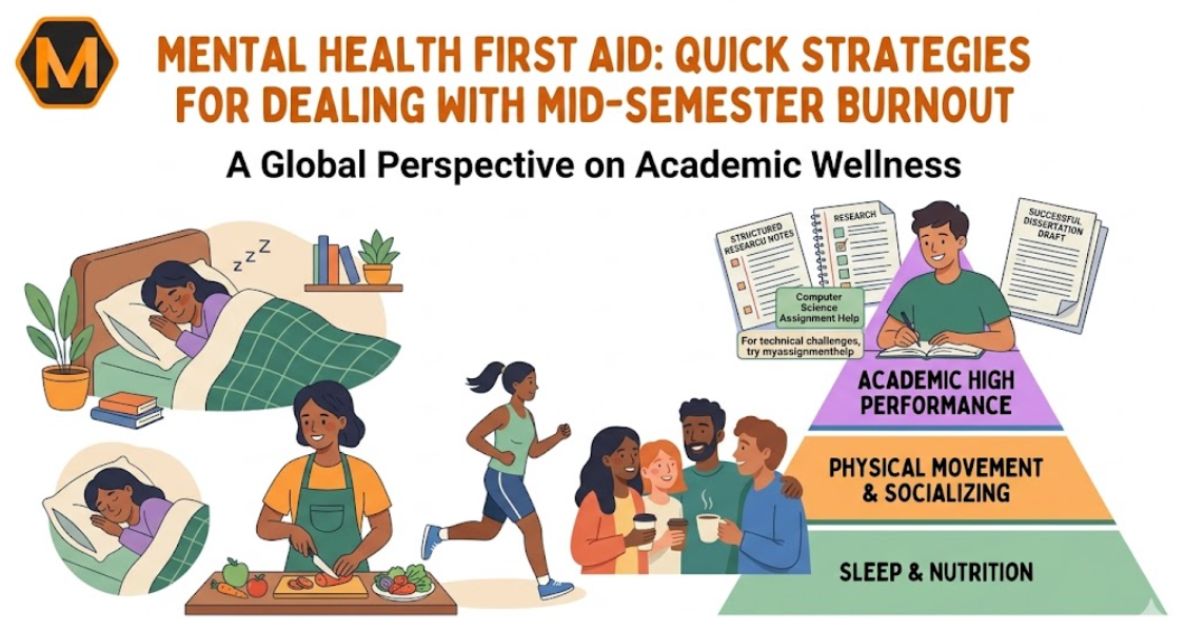
The mid-semester slump is a very real phenomenon that hits almost every student around the six-to-eight-week mark. At the start of the term, you have fresh notebooks, a clear head, and plenty of motivation. But as the weeks crawl by, the excitement fades, replaced by a mounting pile of deadlines, midterms, and social obligations. This isn’t just “being tired”—it is often the beginning of academic burnout. If you find yourself staring at your laptop screen for hours without typing a single word, or if the thought of opening your email makes your heart race, it’s time to apply some mental health first aid.
Managing your mental well-being is just as important as maintaining your GPA, and often, the two are deeply connected. When the technical pressure of complex subjects becomes too heavy, it’s smart to look for external support to keep your stress levels in check. For example, a student struggling with high-level coding logic might seek out Computer Science Assignment Help from myassignmenthelp to ensure they don’t fall behind while taking a much-needed mental break. By delegating the most taxing technical tasks, you can prevent a temporary slump from turning into a full-blown emotional collapse. Remember, reaching out for help is a sign of high-level time management, not a lack of ability.
Understanding the Burnout Cycle
Burnout doesn’t happen overnight. It is a slow erosion of your energy and enthusiasm. In the 12th grade or early college years, the jump in workload can be shocking. You are expected to be an expert in five different subjects while also planning your future career. This constant “always-on” state keeps your nervous system in a state of high alert.
| Stage of Burnout | Key Symptoms | Recommended Action |
| The Honeymoon Phase | High energy, taking on too many projects. | Set strict boundaries early. |
| Onset of Stress | Lack of focus, irritability, fatigue. | Implement the Pomodoro technique. |
| Chronic Stress | Missed deadlines, physical illness, social withdrawal. | Delegate tasks and seek professional support. |
| Full Burnout | Numbness, complete lack of motivation, “brain fog.” | Intensive rest and academic intervention. |
Recognize the Red Flags of Academic Fatigue
Before you can fix burnout, you have to admit it’s happening. Many students try to “power through,” but this usually leads to lower-quality work and deeper exhaustion. Look out for physical signs like constant headaches, changes in your sleep patterns, or a sudden lack of interest in things you used to enjoy. Emotionally, you might feel more irritable or hopeless about your future career.
If you notice these red flags, the first step is to stop. Take a 24-hour “brain holiday” where you don’t look at anything related to school. This reset helps lower your cortisol levels and allows your brain to shift from “survival mode” back into “learning mode.”
The “Micro-Habit” Strategy for Recovery
When you are burnt out, a 10-page research paper feels like climbing Mount Everest. The secret to getting back on track is the concept of micro-habits. Instead of telling yourself you need to study for five hours, commit to just fifteen minutes. Tell yourself you will only write three sentences or solve one equation.
This lowers the “barrier to entry” for your brain. Once you start, you’ll often find that the momentum carries you forward. If it doesn’t, at least you’ve made a small dent in your workload. Use a timer to work in short bursts—25 minutes of work followed by a 5-minute break. This is known as the Pomodoro Technique, and it is a lifesaver for students whose attention spans have been shredded by mid-semester stress.
Technical Relief: Solving the “Input vs. Output” Problem
A major cause of burnout is the gap between what you are expected to produce and the time you actually have. This is especially true in STEM fields where one small error can derail an entire project. If you are stuck on a difficult script, getting python assignment help can be the difference between a restful night and a stressful all-nighter. Utilizing myassignmenthelp allows you to see how experts structure code, which serves as a practical learning tool rather than just a quick fix. When you reduce the “technical noise” in your life, you free up mental energy for other subjects that require your creative focus.
The Connection Between Physical Health and Focus
Your brain is a physical organ. If you aren’t feeding it or letting it rest, it will eventually shut down. Many students survive on caffeine and processed snacks during midterms, which leads to a “sugar crash” that mimics the feelings of depression.
To combat this, focus on “High-Octane” habits:
- Hydration: Dehydration is a leading cause of afternoon brain fog.
- Protein-Rich Meals: Stable blood sugar means stable moods.
- The 20-20-20 Rule: Every 20 minutes, look at something 20 feet away for 20 seconds to reduce digital eye strain.
Digital Minimalism: Declutter Your Brain
Our phones are often the biggest contributors to academic anxiety. Constant notifications from class group chats or social media updates create a sense of “urgency” that isn’t actually there. To practice digital minimalism, try turning off all non-human notifications. If it isn’t a direct text or call from a real person, you don’t need to see it immediately.
Designate “No-Tech Zones” in your day, especially during meals and the hour before sleep. This helps your nervous system calm down. When your digital environment is cluttered, your mental environment follows suit. By clearing the screen, you clear the path for better concentration and less emotional overwhelm.
Reorganizing Your Academic Workflow
Sometimes burnout isn’t about the amount of work, but the way we handle it. If your desk is covered in loose papers and your desktop has 50 open tabs, your brain is working overtime just to process the mess.
The “Clean Slate” Method:
- Physical: Spend 10 minutes clearing your workspace every night.
- Digital: Use folders for each subject and close all tabs that aren’t related to the current task.
- Mental: Use a “Brain Dump” list. Write down every single thing you are worried about on a piece of paper. Once it’s on paper, your brain can stop “looping” the thought.
The Power of Physical Movement
It sounds cliché, but moving your body is one of the fastest ways to change your mental state. You don’t need a grueling gym session; a twenty-minute walk outside can significantly boost your dopamine and serotonin levels. Fresh air and sunlight help regulate your internal clock, which often gets messed up during late-night study sessions.
Movement acts as a “reset button” for the brain. It forces you to get out of your head and back into your body. If you feel a panic attack coming on or if the stress feels like a heavy weight on your chest, stand up and move. The physical shift often breaks the cycle of negative thoughts that fuel burnout.
Social Support: Why Isolation is the Enemy
When we feel overwhelmed, our instinct is to hide. We stop answering texts and skip social events to “focus on work,” but often we just end up staring at the wall. Human connection is a biological necessity for stress regulation.
Talking to a peer who is going through the same thing can lower your blood pressure. It validates your feelings and reminds you that the problem is the system, not your value as a person. Set up “Co-working dates” where you and a friend sit in a library together. You don’t even have to talk—just the presence of another person working can help keep you grounded.
Creating a Sustainable Routine
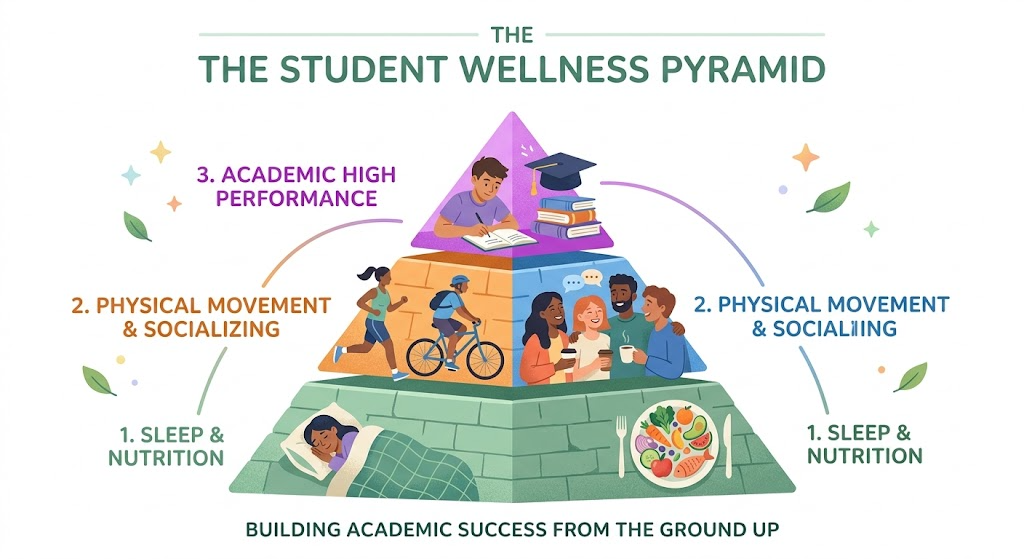
The goal of mental health first aid is to get you through the crisis, but the goal of a sustainable routine is to prevent the next one. This requires radical honesty about how much you can actually achieve in a day.
- Priority 1: Sleep (7-9 hours).
- Priority 2: Nutrition and Movement.
- Priority 3: High-priority academic tasks.
- Priority 4: Socializing and rest.
If you try to put academics at the top of the pyramid while ignoring sleep and food, the whole structure will eventually collapse.
Building a Long-Term Support System
Mental health first aid is about quick fixes, but long-term health requires a system. This includes talking to your professors when you’re struggling, joining study groups where you can share the load, and being honest with your friends about your stress levels. You are not alone in this journey, and most of your peers are feeling the exact same pressure.
Don’t wait until you are at your breaking point to change your routine. Incorporate these strategies today—whether it’s delegating a complex coding task, taking a walk, or simply turning off your phone. Your health is the most valuable asset you have in college; guard it fiercely, and remember that success is a marathon, not a sprint. By pacing yourself and using the resources available to you, you can finish the semester strong without losing your peace of mind.
Frequently Asked Questions
How can I tell the difference between normal stress and burnout?
Stress usually involves feeling “too much”—too many pressures and too much to do—but you still feel that if you get it under control, you’ll feel better. Burnout feels like “not enough.” It is a sense of being empty, devoid of motivation, and feeling as though your efforts no longer make a difference.
Is it actually possible to recover from burnout mid-semester?
Yes, but it requires a change in strategy. You cannot recover by doing the exact same things that caused the exhaustion. Recovery involves radical prioritization: identifying which tasks are essential, delegating what you can, and scheduling non-negotiable “blackout periods” where you completely disconnect from academic work.
Does taking a break actually help, or will it just make me more behind?
A strategic break is an investment in your cognitive function. When you are burnt out, your brain’s “executive center” slows down, making simple tasks take hours. A proper rest period resets your focus, allowing you to complete your remaining work in a fraction of the time it would take while exhausted.
What is the fastest way to reduce academic anxiety right now?
The most immediate relief comes from “externalizing” your stress. Move your to-do list from your head onto a physical piece of paper and break every large project into tiny, five-minute steps. Reducing the “mental load” of remembering everything allows your nervous system to exit survival mode and begin focusing again.
About The Author
Min Seow is a dedicated content strategist and lead editorial contributor at myassignmenthelp. With a deep-seated passion for academic excellence, she focuses on creating high-quality resources that help students navigate complex educational challenges and achieve their personal goals.
People Also Read: Elizabeth Huberdeau: Biography, Marriage to John Cena, Divorce & Life Today

Welcome to Blessings There! I’m the creator and author behind this website. I love sharing useful insights, informative content, and knowledge that can add value to everyday life.