

Most small business owners obsess over their product and treat packaging like an afterthought. That’s understandable — you’re stretched thin, and a bottle is just a bottle, right?
Wrong. And the market data is pretty clear on this.
A 2025 McKinsey survey of over 11,000 consumers across 11 countries found that glass ranked as one of the top two most sustainable packaging materials everywhere — every country, no exceptions. In the US specifically, 60% of respondents called glass bottles and jars “extremely or very sustainable.” Only 22–33% said the same about plastic. Customers are reading your packaging before they read your label. Whether you’re selling hot sauce, beard oil, or herbal tinctures, the bottle you put it in is doing a job before the product ever gets a chance to.
So the question isn’t really whether glass is worth it. The question is how to source it without destroying your margins or getting locked into a minimum order you can’t move.
First: Know Exactly What You’re Ordering
This sounds obvious. It isn’t.
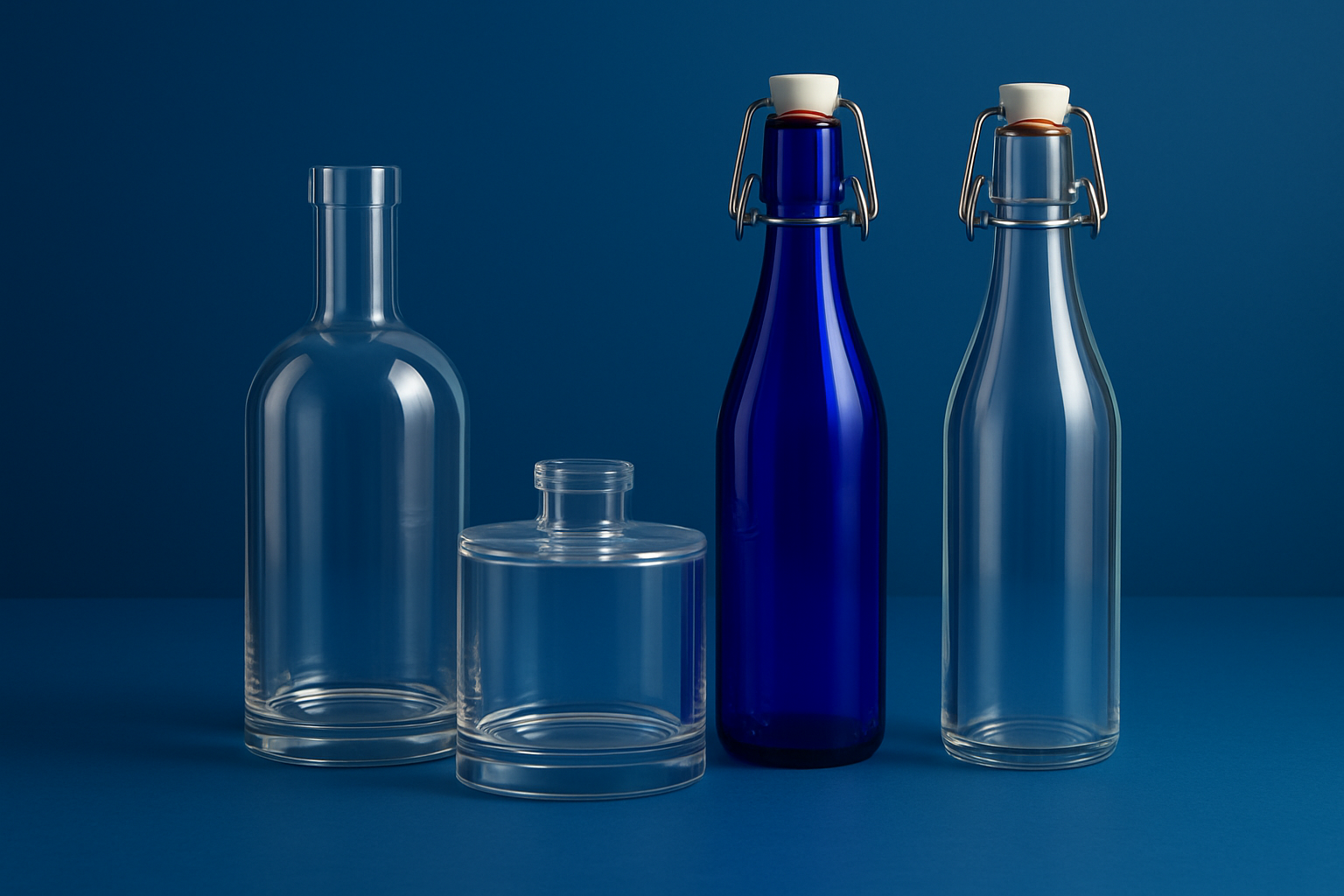
Glass bottles come in more variations than most people expect — bottle type (Boston round, dropper, spray, swing-top, cork-finish), volume, glass color (clear, amber, cobalt, frosted), and closure type. Every one of those variables affects price, compatibility with your product, and whether your formula stays stable on the shelf.
Amber glass blocks UV light. If you’re selling anything oil-based or light-sensitive — tinctures, serums, infused oils — clear glass is going to degrade your product over time. That’s not a packaging preference, it’s chemistry. Spray tops work for body mists and surface cleaners. Dropper tops are for serums and anything dosed by the drop. Getting the wrong closure means you’re either leaking or re-ordering.
Before you request a single quote, spend 20 minutes writing out your actual specs: bottle type, volume, color, closure. Most sourcing disasters don’t start with a bad supplier. They start with a buyer who wasn’t specific enough.
The Wholesale Math (It’s Simpler Than You Think)
The US glass packaging market hit $24.83 billion in 2025. That’s not a niche. Suppliers have scaled up to meet demand across all order sizes — which means small businesses today have access to wholesale pricing that used to require massive minimums.
Here’s the practical reality: buying 12 bottles at a time from a retail supplier costs roughly 3–5x more per unit than buying 100–500 at wholesale. If you’re producing more than a few dozen units per run — which, if you’re selling consistently, you probably are — wholesale almost always pays for itself within a single order cycle.
The Bottle Depot is one of the better-known options for small US businesses. They’ve been supplying glass bottles, jars, vials, and closures since 2018, with over 5,000 customers across the country. No five-figure minimums. Orders ship in 3–5 business days. They cover the full range — dropper bottles, Boston rounds, spray bottles, roller bottles, lidded jars — so you’re not piecing together your packaging from three different vendors.
The point isn’t to sell you on any particular supplier. It’s this: if you’re reordering retail bottles every month, you’re probably overpaying by a significant margin and don’t realize it yet.
The Costs People Forget to Factor In
Unit price is the easy number. These are the ones that bite you later.
Caps and closures. A bottle without a compatible closure is useless. Thread sizes vary. Always confirm compatibility before ordering separately, or just source bottle and cap from the same supplier.
Samples. Order them. Every reputable supplier offers them, and if yours doesn’t, that’s information. A sample run lets you test fill compatibility, check the seal, and see how the bottle photographs — before you’ve committed to 500 units of the wrong thing.
Shipping weight. Glass is heavy. Freight costs need to be in your per-unit math, not discovered after checkout. And ask how the supplier packs for transit. A 2% breakage rate on a 500-unit order is quiet money you’ll never fully account for.
Branding. Blank glass looks generic. Whether you’re applying labels yourself or working with a supplier that offers custom printing, factor that cost in early. Some suppliers — including The Bottle Depot — offer custom label and screen printing services, which cuts down on assembly steps if you’re scaling.
Don’t Shop for Glass Like It’s a Commodity
The brands that keep their packaging consistent and their costs stable aren’t hunting for the cheapest option every time they reorder. They picked a supplier, got to know the catalog, and stuck with it.
That relationship matters more than people think. When you have a go-to supplier who knows your specs and holds your preferred SKUs, reordering is a 10-minute task instead of a 2-hour research project. When something’s back in stock or a better option comes in, they’ll tell you.
Start small if you need to — sample order, then a modest first wholesale run. But build toward having a packaging supplier you trust the same way you trust your other vendors.
One More Reason to Commit to Glass Now
Consumer preferences aren’t shifting back. The US glass packaging market is projected to reach $36.4 billion by 2035, driven by demand for materials that actually feel sustainable — not just technically recyclable. Independent brands that build their packaging identity around glass now won’t have to rebrand later to catch up with where the market is going.
Pick the right bottle. Order a sample. Then scale from there.
