

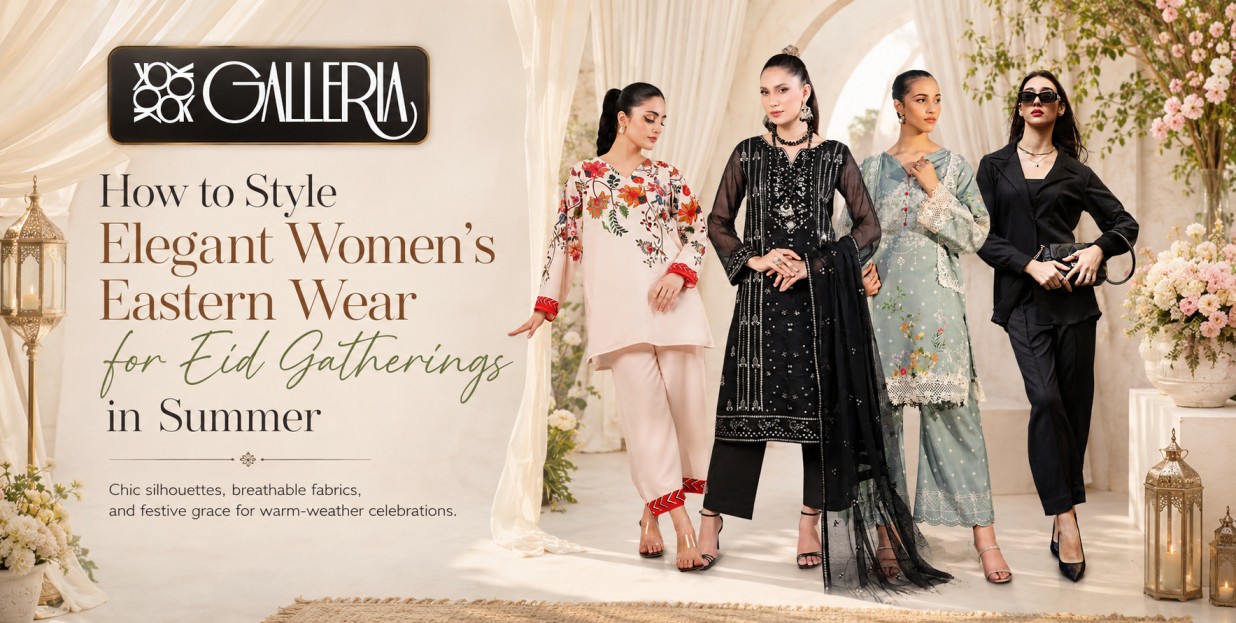
Eid al-Adha runs long. From the early morning qurbani through a family lunch that stretches into the afternoon, then on to a dawat or BBQ that goes well past midnight, it is a full day with three completely different social occasions packed into it.
One outfit cannot carry all of that, and managing your Eid clothes across this hectic schedule requires a different set of priorities. When selecting the right Pakistan Eid dress for each moment, here is what those styling choices should actually look like.
The Morning: Qurbani and Early Breakfasts
Busy mornings need fabric that cooperates. Lawn and soft cotton earn their place here for specific reasons: they breathe in peak summer heat, they do not hold creases through two hours of activity, and they move without resistance.
Heavier fabrics that work beautifully at a dinner table become genuinely uncomfortable before 9 am in May. Cool tones, whites, sage greens, muted greys read as intentional in morning light without the effort that bolder colours demand. They also hold up better photographically in harsh daylight than saturated shades, which tend to blow out or read as flat in outdoor morning settings.
The cuts that work here are clean and unfussy. Anything overly structured or heavily embellished is working against the morning rather than with it.
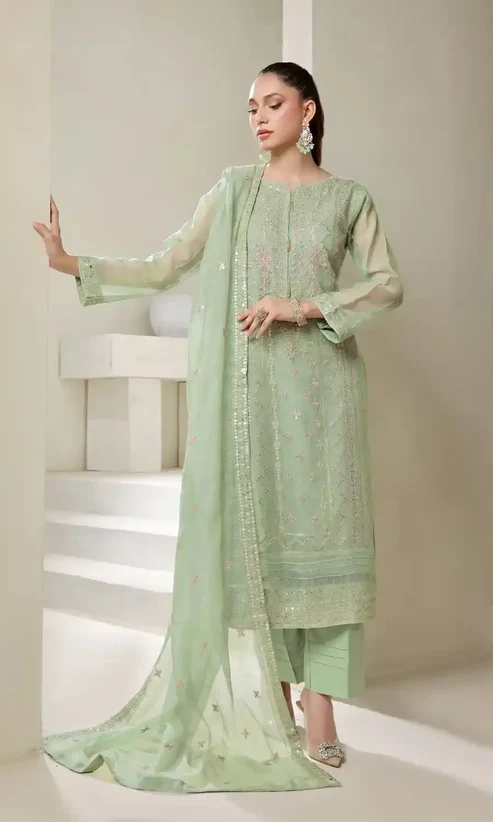
Draping: Pin the dupatta on one shoulder; it holds through a busy few hours without needing adjustment.
Footwear: Slide-on leather flats or minimalist khussas.
Accessories: Small hoops, hair back, nothing that competes with the morning.
A woman’s Eid collection built around crisp cuts and quiet tones is where to start for this part of the day, making these breathable pieces the true anchor of any premium ladies’ Eid collection.
The Afternoon: Formal Family Lunch
The family lunch is the most photographed moment of Eid-ul-Adha, and afternoon daylight is genuinely the most demanding light to dress for. It is direct, unfiltered, and picks up every detail. Pale colours can wash out entirely. Flat fabrics look limp.
Overly busy patterns become visually exhausting at close range across a long table. What holds up well is a considered print in a fabric with some weight and movement to it, printed chiffon or structured lawn, where the pattern is bold enough to read clearly but the cut keeps it contained.
This is also the moment where the outfit needs to work socially, not just visually. A family lunch with thirty people at the table runs for hours. Comfort is not optional.
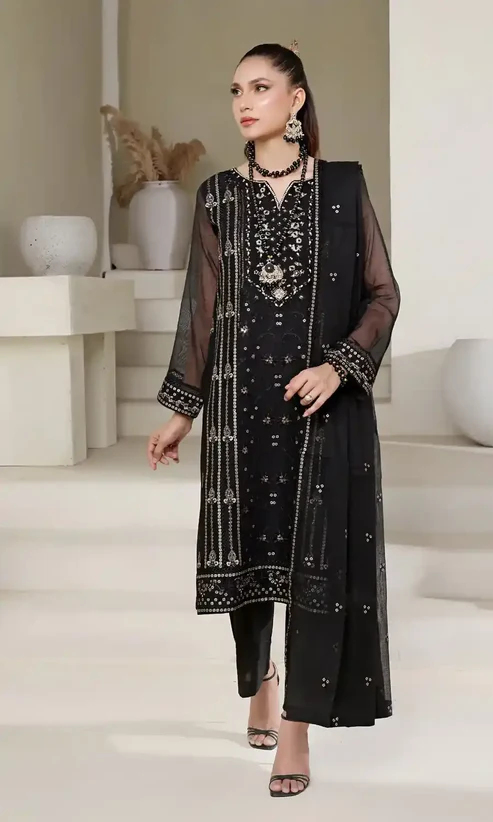
Draping: Drape the dupatta across both arms and let the print do the work.
Footwear: A low block heel or mule. The outfit has shifted; the shoes should too.
Accessories: A leather-strap watch and delicate jhumkas. Enough to complete the look, not enough to compete with the print.
For ladies’ Eid dresses that work for this moment, an artistic print in a structured cut is the right starting point when navigating the vast selection of Eid dresses for daytime wear.
The Evening: Dawats and Festive BBQs
By evening, the brief has changed considerably. An outdoor dawat or BBQ introduces variables that indoor dressing does not have to account for, such as warm air, smoke, uneven lighting, and a dinner that runs late. The wardrobe decision is partly aesthetic and partly practical.
Fabric with presence handles this setting better than anything lightweight. Organza, raw silk, and heavy chiffon hold their structure through a long evening and carry the visual weight that festive occasions after dark actually call for. Colour strategy matters here too.
Deep blues, emeralds, and rich plums read with genuine depth under warm, low outdoor lighting. Pastels lose their tone entirely in the same conditions, and pale shades at a BBQ dinner are a decision most people regret before the main course.
Intricate embroidery or embellished necklines take over from daytime prints as the visual anchor, the craftsmanship that makes an evening outfit register as genuinely festive rather than simply dressed up.
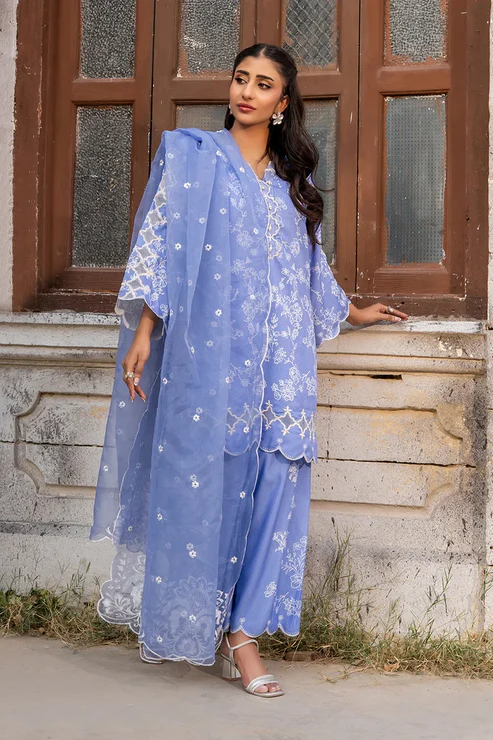
Draping: Let a heavily embroidered or sheer organza dupatta fall loosely on one side. The embroidery is worth seeing.
Footwear: Strappy metallic heels or embellished festive sandals.
Accessories: A sleek clutch, stacked bangles, a bold lip.
An Eid dress for women built for this occasion leads with fabric weight and embellishment the elements that register at an evening gathering.
Smart Shopping: Building the Full Wardrobe
Festive collections follow a predictable pattern every year. Embroidered evening pieces and quality lawn sets in popular sizes sell out two to three weeks before Eid, well before most people have started thinking seriously about what they need. By the time the festive mood kicks in and the shopping actually begins, the cuts and sizes that would have worked are already gone, meaning you are left with picked-over stock, missing out on the best Eid sale on brands entirely.
The pieces that deserve priority are the occasion-specific ones. A strong morning outfit in the right fabric or an evening piece with real embroidery cannot be pulled together at the last minute from whatever is available. Those are the decisions that need to be made early. Basics and separates can be worked around far more easily.
For online Eid dress, shopping before the rush means choosing deliberately rather than under pressure. Eid dresses online at quality brands allow proper comparison across cuts, fabrics, and occasions, something the final week before Eid does not allow for.
To build a wardrobe that carries from a busy Eid morning to an elegant evening dawat, explore AK Galleria’s women’s eastern wear collection at this level. Do not stay complete for long before Eid.
