

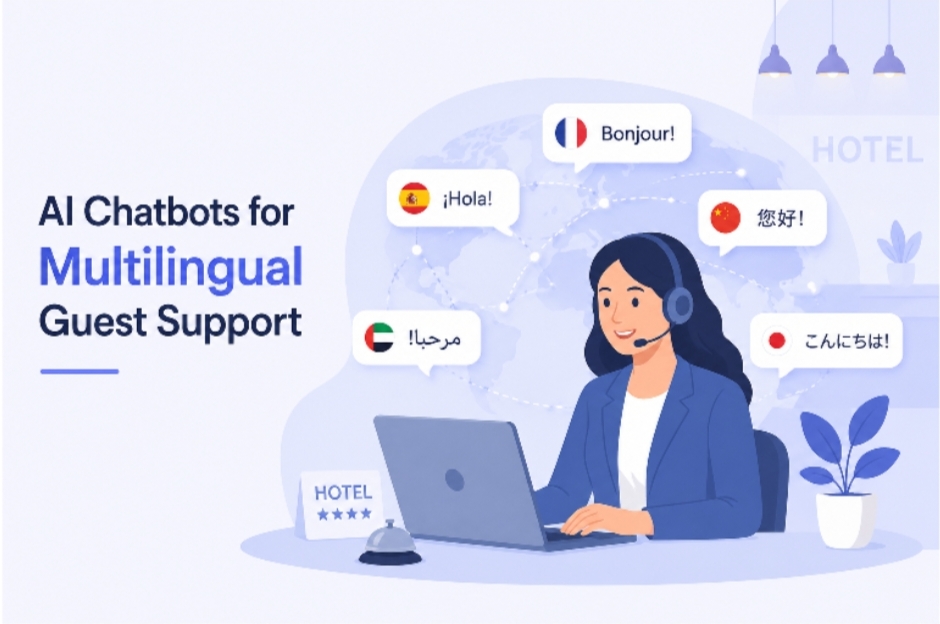
International travel is now more globalized than ever. But while occupancy numbers look healthy, the way hotels operate inside tells a different story. Front desks are stretched thin, staff turnover remains high and a growing share of arriving guests simply do not speak the hotel’s working language. The gap between what guests expect and what most properties can realistically deliver is widening.
Hotels have spent years investing in better booking engines, loyalty programs and guest experiences. Yet many still lose international guests at the simplest stage of the journey: communication. When travelers cannot get answers before, during, or after their stay, frustration turns into abandoned bookings, poor reviews and missed revenue opportunities.
The Language Gap Is a Revenue Problem
Most hotel operators frame language barriers as a service quality issue. It is actually a revenue problem first.
Research from CSA Research found that 75% of consumers are more likely to purchase from a brand when product information is available in their native language. In hospitality, that “product” is the stay itself and the decision to book, upgrade or return is shaped heavily by how clearly a guest can communicate before and during their trip. A potential guest from Seoul who cannot get a clear answer about room accessibility from your website will not file a complaint. They simply book elsewhere.
This is what makes the status quo so quietly expensive. A 100-room property losing just 5% of direct international bookings to slow or unclear communication is forgoing an estimated $50,000 annually. That too, before accounting for the OTA commission they pay when those same guests eventually book through a third-party platform.
An AI chatbot for hotels closes this loop by handling pre-stay inquiries instantly, in the guest’s native tongue, at any hour. That is not a marginal improvement. For properties actively fighting to shift bookings off OTAs, it is a structural one.
The High Cost of Language-First Recruitment in a Tech-First World
The instinctive response to a communication gap has always been headcount. Add a multilingual staff member. Extend front desk hours. Hire a night agent who speaks Mandarin or Arabic.
That model is no longer financially viable for most properties. Labor costs across the hospitality sector have climbed an average of 18% since 2021 and the shortage of experienced staff is structural, not cyclical. Even when multilingual hires are available, the demand for 24/7 coverage across a dozen or more languages is simply impossible to meet through staffing alone.
Hotel support automation absorbs the volume that was never a good use of human time in the first place. When an AI-powered guest communication agent is handling several dozen repetitive queries per shift, front desk staff are freed to focus on the guest interactions that actually require judgment, empathy and personality. That reallocation of attention is often what separates a three-star review from a five-star one.
What Multilingual AI Chatbot Does for Hospitality
A multilingual hotel chatbot can answer questions in dozens of languages. That alone does not make it valuable.
Hotels will not gain an advantage because they can answer the problems of guests in French, Japanese, or Spanish. The real advantage of an enterprise hospitality chatbot platform comes from what happens after that message is received.
If a guest reports a broken air conditioner at midnight, the issue is not translation. The issue is making sure the request reaches the right department, is acted on quickly and that the guest receives updates without needing to follow up repeatedly.
The same applies across the guest journey. A request for early check-in should be checked against room availability. A room service order should reach the kitchen. A maintenance issue should become a work order. A returning guest’s preferences should be available before arrival.
Unlike traditional customer service tools, conversational AI for hospitality must support both guest communication and operational coordination. This is why hotels are increasingly looking toward AI agents connected to property management systems, guest messaging platforms and operational workflows. The value is not in answering more questions. It is in resolving more requests without creating additional work for staff.
Why Integrated AI Agents Deliver Better Guest Experiences
- Early check-in requests can be verified against real-time room availability, allowing guests to receive accurate responses without waiting for staff intervention.
- Room service orders can be routed directly to the kitchen, reducing delays and minimizing unnecessary back-and-forth between departments.
- Maintenance issues can be logged and assigned to the appropriate team as soon as they are reported, helping resolve problems more efficiently.
- Returning guest preferences, from room location requests to dietary requirements, can be referenced throughout future stays to create a more personalized experience.
When AI agents are connected through hotel CRM integration, they can reference guest preferences across future stays. This help streamline operations, reduce manual coordination and create a smoother experience for both guests and staff.
How a Multilingual Hotel Chatbot Improves Revenue Generated by Hotels
Easy booking is only one part of a hotel’s revenue opportunity. Upgrades, dining reservations, spa treatments, airport transfers and late check-outs can all contribute significantly to the value of each stay. Yet many of these opportunities are missed because hotels struggle to engage international guests consistently after a reservation is made.
Language barriers do not disappear once a guest checks in. They continue to affect how effectively hotels communicate offers, recommendations and services throughout the stay. As a result, international travelers are often less exposed to revenue-generating opportunities than guests who share the hotel’s primary language.
A hospitality chatbot platform with multilingual support helps close that gap by delivering relevant recommendations and offers in the guest’s preferred language across channels such as web chat, WhatsApp, SMS and mobile apps. This allows hotels to promote ancillary services more consistently while creating a more personalized guest experience.
For hotels serving a global audience, better communication can influence not only guest satisfaction but also overall revenue per stay.
What Separates Hospitality AI Platforms From Generic Chatbots
Not every AI chatbot is built for hotel operations. While many tools can translate messages and answer common questions, multilingual guest support requires systems that can work across departments, channels and operational workflows.
For hotels, the challenge is ensuring guest requests reach the right team, retain context and move toward resolution without creating additional coordination work for staff. Hospitality-focused solutions are increasingly evolving into hotel customer service automation to solve these challenges.
This is why an enterprise hospitality chatbot platform is increasingly built around integrations, workflow automation and omnichannel communication rather than conversation alone. Platforms such as GetMyAI are designed with the operational model of a hospitality chatbot platform in mind, helping hotels manage multilingual guest interactions across channels while connecting them to the systems teams already use.
The Strategic Shift Worth Making
For hotels serving an increasingly international guest base, multilingual support is no longer just a customer service consideration. It has become a factor that influences bookings, guest satisfaction, operational efficiency and revenue generation.
The challenge is not simply responding to guests in different languages. It is doing so consistently, across every stage of the guest journey, without increasing staffing costs or operational complexity. This is where modern hotel customer service automation is creating a meaningful advantage. By combining multilingual support automation for hospitality with their CRM, hotels can support more guests, resolve requests faster and create a more seamless experience at scale.
As international travel continues to grow, the gap between hotels that can communicate effectively with global travelers and those that cannot is likely to widen. For many properties, adopting a multilingual AI agent is no longer about experimenting with new technology. It is about building the operational capabilities needed to compete in a global hospitality market.
