

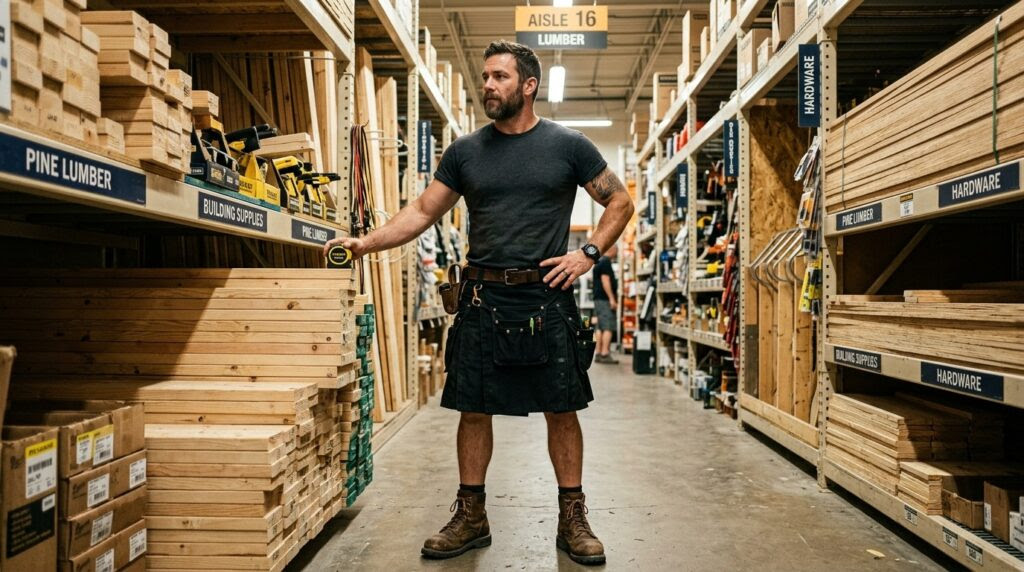
The first time I wore a utility kilt to my local hardware store, I expected to feel slightly silly. Self-conscious. Maybe a little out of place among the men in cargo pants and work boots loading lumber into pickup trucks.
What actually happened was the opposite. Somewhere between the parking lot and the lumber aisle, I realized the kilt outfit I was wearing — utility kilt, plain T-shirt, work boots — looked harder than any pair of jeans I’d ever owned. Not in a costume way. In a “this guy is here to do something” way.
Utility kilts have a quiet ability to make a man look more capable, more grounded, and frankly tougher than equivalent pants outfits. The reasons are aesthetic — silhouette, proportions, color combinations — but the result is real. Once you understand how to style them, a utility kilt outfit can replace your default casual wear with something dramatically more interesting.
Here are five specific utility kilt outfit combinations that consistently work, with explanations of why each one delivers.
Outfit 1: The Workshop Outfit
The combination:
- Black utility kilt with cargo pockets
- Plain heather-grey or charcoal T-shirt
- Brown leather work boots
- Brown leather belt (over the kilt waistband)
- Optional: canvas work apron when you’re actually working
Why it works:
This is the foundational utility kilt outfit, and it works because it’s grounded in honest workwear elements. Nothing about it is decorative or cultural — it’s just functional clothing reorganized around a kilt instead of pants.
The black kilt anchors the outfit visually. Heather grey or charcoal on top breaks up the dark base without being loud. Brown leather boots and belt warm up the otherwise monochrome palette and add the kind of texture that workwear depends on.
This outfit looks right at hardware stores, in your garage, at the lumber yard, mowing your lawn, building furniture, working on your car. It has the visual gravity of someone who works with his hands. The kilt’s pockets carry your phone, multitool, and tape measure better than any cargo pants.
Where to wear it: Hardware stores, home improvement projects, garage work, outdoor labor, weekend errands.
Outfit 2: The Modern Casual
The combination:
- Olive green or khaki utility kilt
- Black or charcoal long-sleeve henley
- Black combat-style boots or rugged casual sneakers
- Simple black leather watch
- No belt (utility kilt’s side buckles handle closure)
Why it works:
This outfit pulls from modern menswear principles rather than workwear. The earthy kilt color, layered top, and rugged footwear create a deliberate, considered look that reads more like fashion-forward casual than utility.
The henley is the key piece. Long sleeves that can be pushed up. A small button placket that adds visual interest. Fits closer to the body than a T-shirt, which prevents the outfit from looking baggy. Combined with a substantial kilt and grounded footwear, the silhouette balances perfectly.
This is one of those utility kilts outfits that works for daily wear in cooler weather without ever reading as costume. People notice the kilt, but they read the outfit as “well-dressed in an interesting way” rather than “wearing a kilt.”
Where to wear it: Coffee shops, brewery visits, casual dinners, art gallery openings, weekend dates, urban walking.
Outfit 3: The Outdoor Adventurer
The combination:
- Heavy canvas or duck cloth utility kilt in earth tones
- Moisture-wicking technical shirt
- Wool kilt hose or thick crew socks
- Hiking boots
- Optional: light flannel layered over the technical shirt
- Daypack or hydration vest
Why it works:
This is the utility kilt outfit for actual outdoor use — hiking, camping, fishing, exploring. The technical shirt manages sweat. The heavy-canvas kilt resists abrasion from underbrush and rocks. The kilt hose protects your shins from scratches and ticks. The boots handle terrain.
A surprising number of experienced outdoorsmen have switched to utility kilts for hiking once they tried it. The range of motion advantage on steep ascents and descents is significant. The cooling effect on hot trails outperforms shorts. The cargo pockets handle gear better than backpack-only carries.
The earth tones blend with natural environments. The technical shirt and boots ground the outfit in functional outdoor wear. It looks like real adventure clothing, not a costume.
Where to wear it: Hiking trails, camping trips, fishing outings, outdoor festivals, photography expeditions, multi-day outdoor events.
Outfit 4: The Urban Edge
The combination:
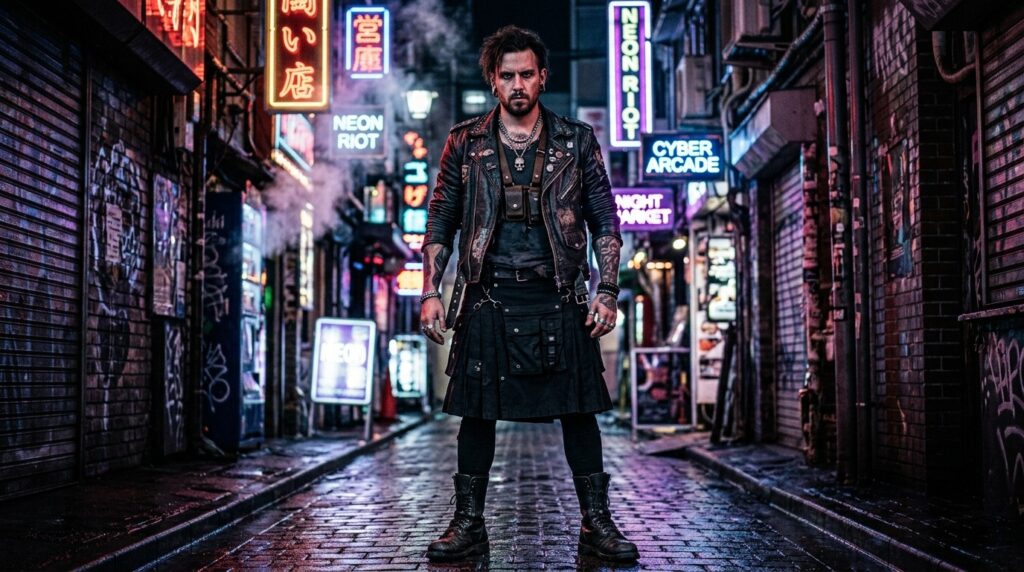
- Black utility kilt
- Black T-shirt or fitted long-sleeve
- Black leather jacket (motorcycle or biker style)
- Black combat boots
- Silver chain or leather wrist accessory
- Optional: black beanie in cooler weather
Why it works:
This is the utility kilt outfit that leans into the alternative-fashion crossover. Black on black on black, broken up only by leather texture and silver accents. It pulls from punk, rock, biker, and post-apocalyptic style influences, all combined into something coherent.
The kilt outfit works in this register because the kilt’s silhouette already reads as slightly outside the mainstream. Adding leather, all-black layering, and substantial boots commits to that direction rather than fighting it. The result is a complete look rather than a confused one.
This outfit is genuinely intimidating in a positive way — it commands space. It works at concerts, alternative venues, urban environments, and places where a man wants to project quiet confidence rather than blend in.
Where to wear it: Rock and metal concerts, alternative venues, dive bars, urban photography, late-night restaurants, cocktail bars with character.
Outfit 5: The Smart Casual Hybrid
The combination:
- Charcoal or dark brown utility kilt (more refined cut, fewer cargo pockets)
- Crisp white or light blue button-down shirt (sleeves rolled to elbows)
- Brown leather belt
- Brown leather casual shoes or chukka boots
- Brown leather watch with simple face
- Pocket square in a complementary color (optional)
Why it works:
This is the utility kilt outfit that bridges into smart casual territory — the equivalent of “kilt instead of dark jeans” for a date, business casual office environment, or family event.
The trick is in the supporting pieces. A pressed button-down shirt elevates the kilt from workwear to something more refined. Leather accessories in matching tones add intentionality. The kilt itself should be a more refined cut — less utility-heavy, possibly without obvious cargo pockets.
This outfit works in environments where wearing jeans would be acceptable but slightly underdressed. It demonstrates that utility kilts can absolutely participate in semi-formal contexts when styled correctly.
Where to wear it: Casual office environments, first dates, family gatherings, casual restaurants, art events, daytime weddings (informal), business casual social events.
The Common Threads Across All Five Outfits
Looking across these five kilt variations, a few patterns emerge that apply universally:
- Solid colors over patterns. Utility kilts work best in solid colors: black, charcoal, olive, khaki, brown. Save patterned tartan for traditional Scottish kilts. Solid colors blend into modern wardrobes seamlessly.
- Considered footwear. Sneakers, boots, or proper casual shoes — never sandals, flip-flops, or anything that visually undercuts the kilt’s substantiality. The footwear weight should match the kilt’s weight.
- Texture over decoration. Leather, canvas, denim, wool — utility kilt outfits are built on substantial textures rather than decorative elements. No costume jewelry, no patterned accessories, no Highland-inspired pieces with daily-wear utility kilts.
- Modern fit on top. The kilt has structure and presence. The top half of the outfit should also fit properly — close enough to the body to balance the kilt’s volume, never baggy or overly loose.
- Confidence in posture. A utility kilt outfit works only if the wearer projects confidence. Slumping, fidgeting, or appearing self-conscious undermines the entire look. Stand tall.
What to Avoid in Utility Kilt Outfits
Equally important — what doesn’t work:
- Tartan or traditional Scottish accessories. Sporrans, ghillie brogues, dress shirts with wing collars, kilt pins, sgian dubhs. None of these belong with a daily-wear utility kilt. Mixing traditional accessories with modern utility kilts creates a costume effect rather than a coherent outfit.
- Athletic wear paired carelessly. Athletic shoes with formal tops creates confusion. Either commit to athletic styling (sport kilts and athletic gear) or commit to casual or smart styling (everything more deliberate).
- Bright colors that fight the kilt. Kilts have visual weight. Bright tops or accessories pull focus and create visual chaos. Stick to muted, considered color palettes.
- Mismatched proportions. Tight skinny jeans tops paired with substantial kilts look off. Baggy oversized shirts on top of fitted kilts look wrong. Match the structural weight across the outfit.
- Flip-flops or beach footwear. These specifically don’t work with kilts in any context. The kilt’s structure demands real footwear.
How to Build a Utility Kilt Outfit Wardrobe
If you’re starting from zero and want to be able to dress in utility kilts daily, the buying order should be:
- One black or charcoal utility kilt — covers 80% of contexts
- One olive or khaki utility kilt — for variety and outdoor wear
- Solid color T-shirts in heather grey, black, white, navy
- Two pairs of boots — one work-style, one combat or casual
- One pair of casual leather shoes or chukkas — for the smart casual outfit
- Long-sleeve henleys and button-down shirts in solid colors
- Optional: leather jacket for the urban edge style
Total investment: $400-$700 to build out a complete utility kilt rotation that handles daily wear, weekend casual, outdoor adventure, and smart casual occasions.
Frequently Asked Questions
Are utility kilt outfits appropriate for work?
Depends entirely on your workplace. Trades, creative industries, tech, and outdoor work usually accept them. Corporate offices and conservative client-facing roles often don’t. Test cautiously.
Can I wear a utility kilt outfit to a wedding?
Generally no for traditional or formal weddings — those call for traditional kilt outfits or standard suits. For very casual weddings (backyard, beach, alternative venues) where the dress code is explicitly relaxed, a smart casual utility kilt outfit can work.
Do I need to wear something under a utility kilt?
For daily wear, yes — compression shorts, athletic briefs, or boxer briefs. The traditional “regimental” approach is impractical for sitting on public chairs and active daily life.
How do utility kilt outfits look in summer heat?
Better than equivalent pants outfits. The open architecture allows airflow. Light-colored utility kilts paired with breathable tops handle heat well.
Can I wear a utility kilt with sandals?
No. Sandals undercut the kilt’s structural weight. Stick to boots or substantial casual shoes.
Will I get stares wearing a utility kilt outfit publicly?
Less than you’d expect. Most strangers don’t react. Those who do are usually positive. The first month is the hardest; after that, it normalizes for both the wearer and observers.
A utility kilt isn’t just an alternative to pants — styled correctly, it’s an upgrade. These five outfit combinations cover most real-world situations a man encounters. Try one for thirty days. You’ll be surprised how often the kilt outfit beats the jeans outfit you used to default to
