

I spent three years studying a second language in a quiet classroom. I bought the expensive textbooks. I filled out hundreds of flashcards. I passed every single written test with a perfect score. I felt totally invincible.
Then I walked into a crowded coffee shop while traveling, and the person behind the counter asked me a very basic question about my order. My brain completely froze. I stood there staring blankly while a line of annoyed customers formed behind me.
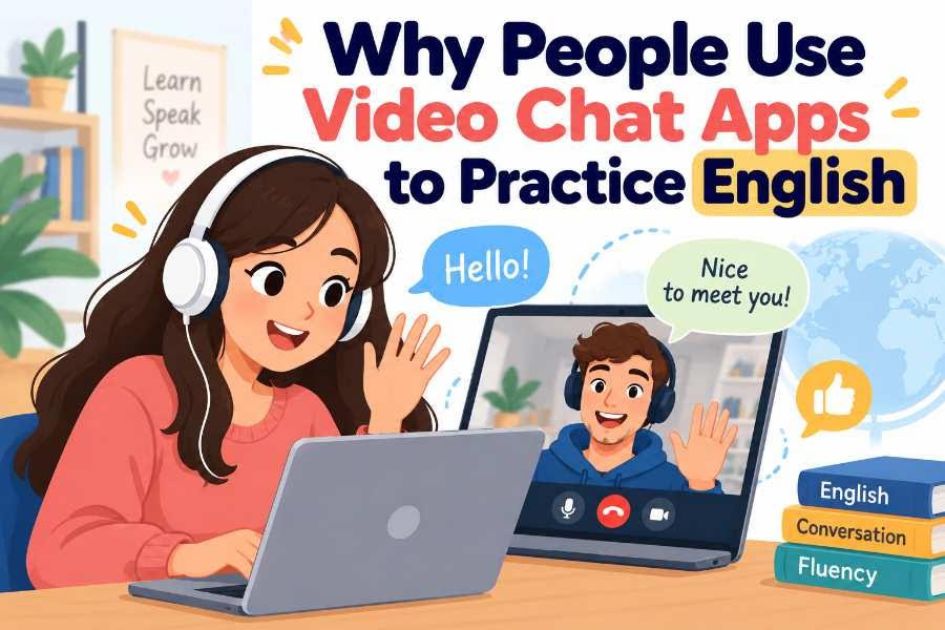
This exact scenario is why millions of people learning English are abandoning traditional study methods. Memorizing lists of verbs is safe. It is predictable. But it does not teach you how to think on your feet. To fix this, language learners are logging onto random video chat platforms. Apps like OmeTV have accidentally become the largest, most effective language exchanges on the planet.
All that studying meant absolutely nothing in that moment, because I had no idea how to talk to a live human being under pressure.
Here is exactly why talking to random strangers works better than reading a textbook.
The Problem With Classroom Audio Tapes
Think about the listening exercises you did in school. The voice actors speak incredibly slowly. They pronounce every single letter. They use perfect, strictly formal grammar.
Real humans mumble. They talk too fast. They chew gum while speaking. They smash words together. When you use a textbook or an audio app, you control the speed of the lesson. You can pause the track, translate the sentence in your head, figure out the right verb tense, and then slowly say the answer out loud.
When you connect with someone on a random chat site like the original Omegle or today’s Coomeet, the conversation happens at full speed. You have to process what the other person is saying instantly. That real-time pressure is exactly what your brain needs to bridge the gap between passive knowledge and active fluency. You stop translating every single word in your head because you literally do not have the time to do it. You just start talking.
The Magic of Zero Social Consequences
It sounds terrifying to turn on a webcam and try speaking a foreign language with a complete stranger. Why would anyone willingly put themselves through that kind of stress?
Because the social stakes are actually zero.
If you try to practice English with your friends, your family, or your coworkers, you care what they think about you. You worry about sounding foolish. You worry they will judge your heavy accent. That fear keeps your mouth shut.
On a random video app, that social pressure completely vanishes. You are talking to someone you will never, ever see again in your entire life. If you totally mess up a sentence, forget the word for “car,” or feel incredibly embarrassed, you have an immediate escape route sitting right on your screen.
You just click the “Next” button.
The screen goes black, and a brand new face appears. You get a totally blank slate. That anonymity gives you a massive confidence boost to test out weird phrases, mimic accents, and make a hundred mistakes without any long-term consequences.
Surviving Real Accents and Street Slang
The English you learn in a grammar workbook is incredibly stiff.
Using the OmeTV platform hits you with reality. One minute you might match with a university student from Texas dragging out their vowels. The next minute, you are trying to keep up with a teenager from London talking a mile a minute. You quickly realize that the way someone speaks in New York sounds wildly different from a speaker in Sydney or Dublin.
You also learn filler words. School never teaches you how to say “um,” “like,” or “you know.” But those tiny words are exactly what native speakers use to buy themselves time to think. Hearing strangers use these fillers teaches you how to sound natural instead of sounding like a perfectly programmed robot.
I once spent forty minutes on a random chat site talking to a mechanic from Chicago. I didn’t just practice my past tense verbs. I learned exactly how Americans joke around, complain about the weather, and use highly specific local slang. You cannot get that from a flashcard.
Reading the Room Through Live Video
Text-based chat apps miss a huge part of human communication.
Live video forces you to read body language. If you say a word and the person on the screen squints their eyes and tilts their head, you instantly know they didn’t understand you. You can try saying it a different way. If they laugh, you know your joke landed.
You also get to use your hands. If you forget the English word for “coffee mug,” you can physically hold up your mug to the camera and point at it. The stranger will usually smile and say the word for you. That physical, visual context locks the new vocabulary into your memory far better than reading it on a black-and-white page.
How to Set Up Your Session for Practice
If you are ready to try this out, you need to set up your environment correctly.
In the early days of the internet, finding a safe place to chat randomly was a huge gamble. Today, using OmeTV is much easier because the platform actively filters out bots and bad actors. That means you can actually focus on holding a conversation rather than constantly dodging spam.
Use the built-in location filters. You can specifically target regions where English is the primary language, bumping up your chances of hitting a native speaker.
When the camera turns on, set expectations immediately. Just say, “Hi, I am trying to practice my English, do you mind chatting for a minute?” Most people are incredibly supportive when they realize you are learning. They will happily slow down their speech, correct your pronunciation gently, or teach you a local phrase. If someone is rude, just skip them. You owe them absolutely nothing.
Overcoming the Awkward Silence
Your first few attempts are going to be awkward. Expect it.
You will misunderstand jokes. You will blank on easy words. You might accidentally insult someone because your tone was slightly off. And that is totally fine. Fluency is not about speaking flawlessly. Fluency is the ability to navigate a messy conversation and keep going when things break down.
When you talk to strangers online, you learn the critical skill of talking your way out of a mistake. You learn to laugh at yourself.
We live in a time where global connection is completely free. You do not need to buy a plane ticket to London or New York to immerse yourself in the English language. By logging onto random video chat apps, you instantly plug yourself into the largest, messiest, most diverse language classroom on earth. It takes some guts to turn on your camera and say hello. But if you want to sound like a natural speaker, you have to jump into the deep end. Fire up your webcam, accept that you will make some mistakes, and start swiping. The best English teacher you will ever have might just be the next stranger you meet.
People Also Read: Kanye West Net Worth: Wealth, Yeezy, Earnings & Billion-Dollar Debate

Welcome to Blessings There! I’m the creator and author behind this website. I love sharing useful insights, informative content, and knowledge that can add value to everyday life.
1 thought on “Why People Use Video Chat Apps to Practice English”