

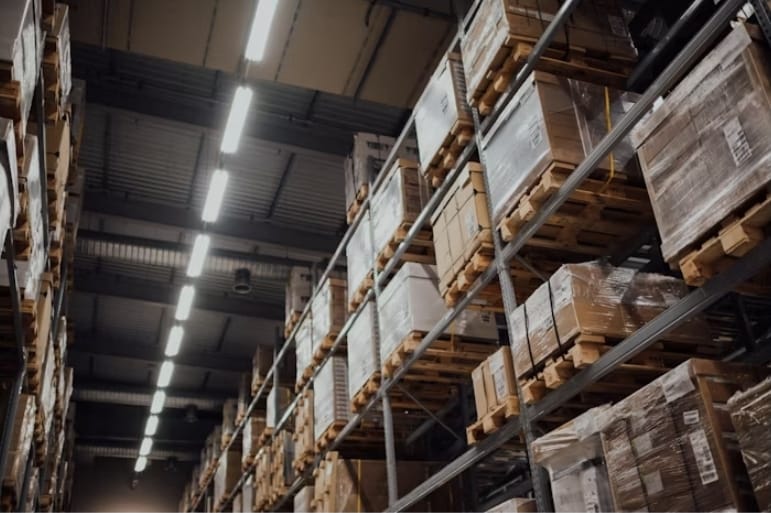
Optimizing an industrial facility requires a rigorous approach to operational expenditures (OpEx). For warehouse operations directors and facility managers, energy consumption often represents a significant portion of overhead. Upgrading to modern lighting systems is a proven strategy to mitigate these costs, provided the technical execution is sound.
This guide outlines the critical technical parameters and financial frameworks necessary for a successful industrial lighting upgrade.
The Hidden Cost of Legacy Warehouse Lighting
Traditional High-Intensity Discharge (HID) lamps and legacy fluorescent systems are rapidly becoming financial liabilities in modern commercial facilities. While their initial procurement costs may seem low, their long-term operational inefficiencies drain facility budgets.
Legacy systems suffer from severe lumen depreciation, losing a massive percentage of their light output well before they burn out. This degradation forces facilities to consume the same amount of electricity for significantly less illumination.
Furthermore, the high maintenance costs associated with frequent bulb replacements and ballast failures—often requiring specialized lifts to access high warehouse ceilings—add considerable hidden expenses to facility management.
Essential Technical Metrics for Upgrading to LED High Bay Lights
Transitioning to commercial-grade LEDs requires more than simply selecting a fixture with a “LED” label. Facility managers must evaluate specific engineering parameters to ensure longevity and efficiency.
Luminous Efficacy (Lumens per Watt)
The fundamental metric of lighting efficiency is Luminous Efficacy, measured in lumens per watt (lm/W). This parameter dictates how effectively a fixture converts electrical power into visible light. For commercial and industrial applications, a high-performance fixture should deliver at minimum 140 to 150 lm/W.
When planning a large-scale warehouse retrofit, sourcing lighting solutions directly from a specialized commercial LED lighting manufacturer ensures optimal luminous efficacy and better quality control. Leading manufacturers like Wosen engineer industrial fixtures specifically designed to exceed standard energy thresholds, offering systems that maintain exceptional brightness while drastically reducing energy consumption across expansive footprints.
- Standard LED: ~100-120 lm/W
- Commercial-Grade LED: 140-150+ lm/W
- Financial Impact: Higher efficacy directly correlates to lower monthly utility bills.
Advanced Thermal Management (Heat Dissipation)
Industrial environments often feature elevated ambient temperatures near the ceiling, which can severely degrade electronic components. Effective Thermal Management is critical to preserving the lifespan of the fixture’s internal diodes and drivers.
Industrial high bay lights must utilize high-quality materials to manage this heat.
- Die-cast aluminum housings are the industry standard, acting as robust heat sinks.
- Strategic fin designs increase surface area, allowing convective air currents to draw heat away from the fixture.
- Failure to specify proper heat dissipation will result in premature fixture failure and negated ROI.
IP and IK Ratings for Industrial Environments
Warehouses are inherently harsh environments, frequently exposing fixtures to dust, moisture, and potential impacts. Therefore, evaluating ingress and impact protection is non-negotiable.
- IP65 or IP66 Ratings: These ratings certify that the fixture is completely dust-tight and protected against powerful water jets. This is essential for facilities that require regular washdowns or suffer from high particulate matter.
- IK08 Ratings: This metric measures protection against mechanical impact. An IK08-rated fixture can withstand significant kinetic strikes, ensuring durability against accidental impacts from forklifts or moving inventory.
Calculating the ROI and Payback Period
Securing budget approval for capital expenditures (CapEx) requires a rigorous, data-driven financial projection. The Return on Investment (ROI) for LED retrofits is generally calculated through a straightforward formula:
- Total Savings: (Annual Energy Savings + Annual Maintenance Savings)
- Payback Period: (Initial CapEx) / (Total Annual Savings)
By significantly reducing the kilowatt-hours (kWh) consumed and practically eliminating routine maintenance (thanks to 50,000+ hour lifespans), most industrial LED upgrades achieve full payback within 18 to 36 months, generating pure operational savings thereafter.
Environmental Impact and Sustainability Goals
Beyond immediate financial returns, upgrading facility infrastructure plays a critical role in corporate sustainability. Modernizing energy consumption directly supports corporate Environmental, Social, and Governance (ESG) initiatives.
According to studies highlighted by the U.S. Department of Energy, the widespread adoption of LED lighting has the potential to save hundreds of terawatt-hours of electricity annually, significantly reducing greenhouse gas emissions and helping commercial entities align with strict modern ESG protocols.
Reducing a facility’s carbon footprint not only satisfies regulatory pressures but also enhances the brand’s reputation among environmentally conscious stakeholders and B2B partners.
Conclusion: Actionable Next Steps for Facility Managers
Upgrading industrial warehouse lighting is a high-yield investment, provided the technical specifications align with facility requirements. The most logical first step is to conduct a comprehensive Lighting Audit.
Facility managers should map current energy usage, identify areas of severe lumen degradation, and consult with specialized commercial lighting engineers to design a system optimized for long-term efficiency and durability.

Meet M Umair, Guest Post Expert and blessingsthere.com author weaving words for tech enthusiasts. Elevate your knowledge with insightful articles. self author on 1500+ sites.
Contact: Umairzulfiqarali5@gmail.com
Whatsapp: +923451718033
1 thought on “Maximizing Warehouse Energy Efficiency: A Facility Manager’s Guide to Industrial LED Upgrades”