

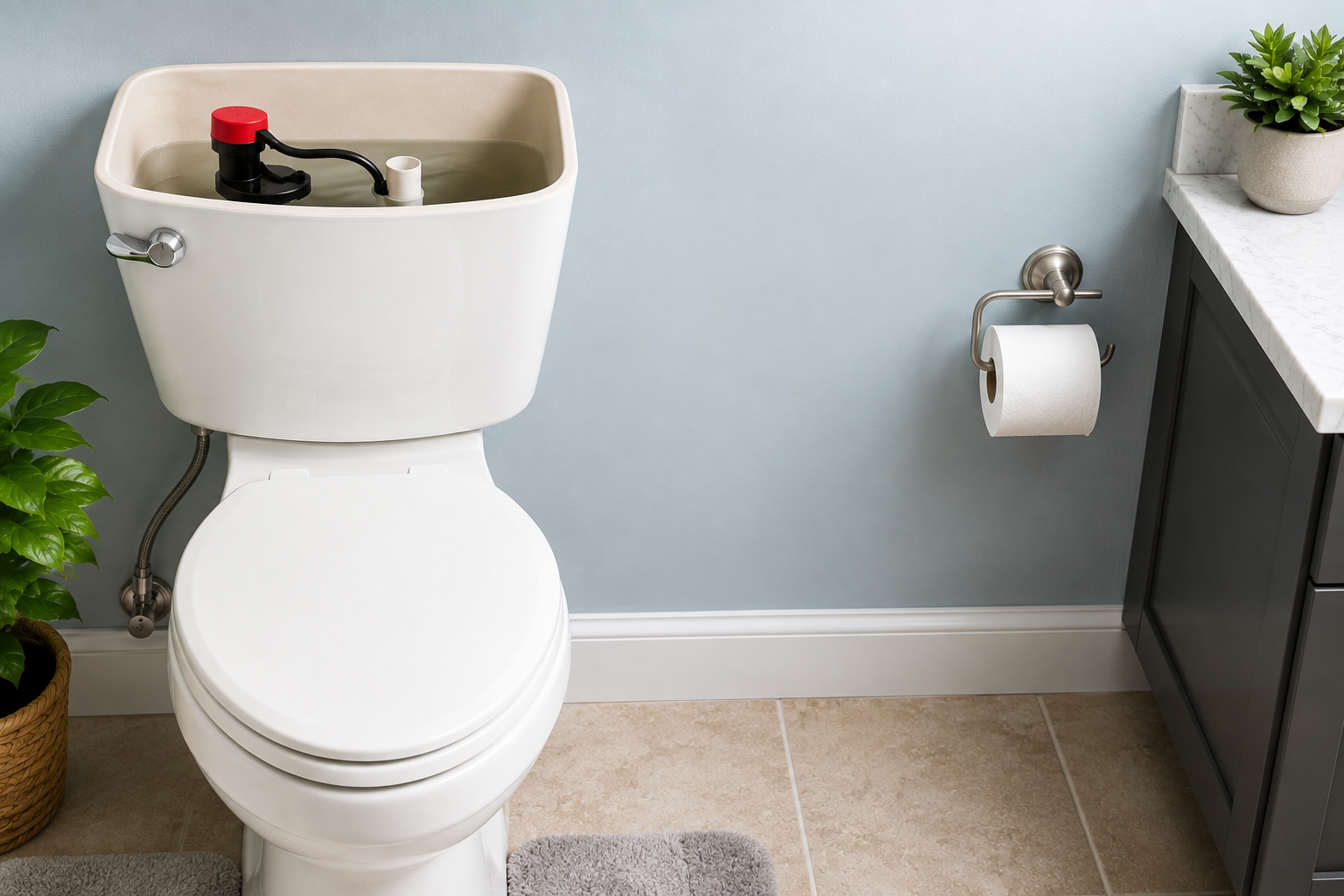
A toilet that won’t stop running is more than just an annoying sound. Even a slow, continuous flow of water can waste hundreds of gallons over time, increasing your monthly water bill and placing unnecessary strain on your plumbing system. Fortunately, many running toilets are caused by relatively minor issues that are easy to identify once you know what to look for.
Before assuming you need a new toilet or calling for a major plumbing repair, it’s worth understanding the most common reasons a toilet continues running after it’s been flushed.
Why Does a Toilet Keep Running?
A toilet operates using a series of simple mechanical components inside the tank. After you flush, the tank empties, the fill valve refills the tank with water, and the flushing mechanism seals the tank until the next flush. If any of these components fail to work correctly, water may continue flowing into the bowl or constantly refill the tank.
In many cases, the problem develops gradually. You may notice the toilet occasionally running after a flush before it eventually begins running almost continuously.
Common Causes of a Running Toilet
The following are some of the most common reasons a toilet won’t stop running:
- A worn or damaged toilet flapper that no longer creates a watertight seal
- An improperly adjusted or tangled flapper chain
- A fill valve that isn’t shutting off completely
- A float that is set too high or has become stuck
- A leaking flush valve seat
- Mineral buildup affecting moving parts inside the tank
- A cracked overflow tube or other damaged tank components
While these issues vary in severity, many are inexpensive to repair once the source of the problem has been identified.
The Toilet Flapper Is Often the Culprit
One of the most common causes of a running toilet is a worn toilet flapper. This rubber seal sits at the bottom of the tank and is responsible for keeping water inside until the toilet is flushed. Over time, flappers can become brittle, warped, or coated with mineral deposits that prevent them from sealing properly.
When this happens, water slowly leaks from the tank into the bowl, causing the fill valve to repeatedly add more water. The result is a toilet that seems to run constantly or cycles on and off throughout the day.
Although replacing a toilet flapper is typically an inexpensive repair, the process involves selecting the correct replacement part and installing it properly. If you suspect this is the problem, you can learn how to replace a toilet flapper with this detailed step-by-step guide.
Check the Water Level Inside the Tank
The water level inside the tank also plays an important role in proper toilet operation. If the float is adjusted too high, water may continue flowing into the overflow tube instead of shutting off at the appropriate level.
Most modern toilets include an adjustment mechanism that allows the float height to be fine-tuned. A properly adjusted float helps ensure the fill valve stops when the tank reaches its designed water level.
Mineral Buildup Can Affect Toilet Components
In areas with hard water, mineral deposits can gradually accumulate on moving parts inside the toilet tank. These deposits may interfere with the operation of the fill valve, float, or flushing mechanism, preventing them from moving freely.
Cleaning mineral buildup during routine bathroom maintenance can sometimes restore proper function and extend the life of these components.
Small Leaks Can Lead to Big Water Bills
Many homeowners underestimate how much water a running toilet can waste. Even a slow leak can continue around the clock, increasing monthly utility costs without drawing much attention. In some cases, the only noticeable symptom is the occasional sound of the toilet refilling on its own.
Addressing a running toilet promptly not only helps conserve water but can also prevent unnecessary wear on internal components that are forced to operate more frequently than intended.
When Should You Call a Plumber?
Some running toilets can be diagnosed quickly, while others involve hidden leaks or damaged internal components that require additional troubleshooting. If replacing worn parts doesn’t solve the problem or you notice water leaking outside the toilet, it’s a good idea to have the fixture inspected by a qualified plumber.
Persistent running water should never be ignored, as it can lead to higher utility bills and unnecessary water waste over time.
Final Thoughts
A running toilet is often the result of a relatively simple problem, but leaving it unresolved can waste thousands of gallons of water over the course of a year. Understanding the most common causes can help you identify the issue early and determine whether a minor repair is all that’s needed.
Frequently Asked Questions
Why won’t my toilet stop running after I flush?
A running toilet is commonly caused by a worn flapper, faulty fill valve, improperly adjusted float, or an issue with the flush mechanism that prevents the tank from sealing or refilling correctly.
Can a running toilet increase my water bill?
Yes. Even a small leak inside the tank can waste a significant amount of water over time, leading to noticeably higher monthly utility bills.
Is a running toilet an emergency?
Not usually, but it shouldn’t be ignored. While most running toilets don’t cause immediate damage, they can waste a large amount of water and may indicate that internal components need attention.
How do I know if the toilet flapper is bad?
If your toilet runs intermittently, the tank slowly loses water between flushes, or water continues flowing into the bowl after flushing, the flapper may no longer be sealing properly.
Can hard water cause a toilet to run?
Yes. Mineral deposits from hard water can interfere with the movement of the fill valve, float, and other internal components, preventing them from operating correctly.
Is it better to repair or replace a running toilet?
In many cases, repairing the internal components is far more affordable than replacing the entire toilet. Simple repairs often restore normal operation and extend the fixture’s lifespan.
