

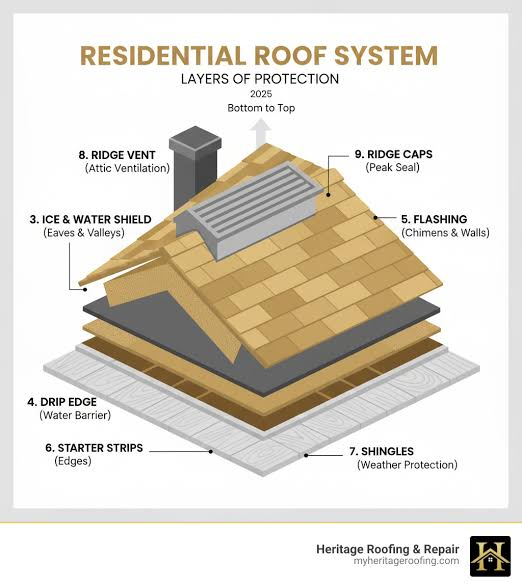
Many homeowners think a roof replacement is simply installing new shingles, but a quality roof is actually made up of many different components that work together to protect your home. If one part fails, the entire roofing system can become vulnerable to leaks and weather damage.
1. Roof Deck
The roof deck is the plywood or OSB foundation that supports the entire roofing system. During a roof replacement, damaged or rotted decking should be replaced before new materials are installed.
2. Ice and Water Barrier
This waterproof membrane is installed along the eaves, valleys, around chimneys, and other vulnerable areas. It helps prevent leaks caused by ice dams and wind-driven rain.
3. Synthetic Underlayment
Installed over the roof deck, underlayment provides a secondary moisture barrier beneath the shingles and adds extra protection if water gets past the roofing material.
4. Drip Edge
Metal drip edge is installed around the perimeter of the roof to direct water into the gutters while protecting the roof decking and fascia from moisture.
5. Starter Shingles
Starter shingles are installed along the eaves and rake edges to create a secure first row and help improve wind resistance.
6. Architectural Shingles
The shingles are the visible layer of the roof and provide the primary defense against rain, snow, hail, and UV exposure. They also give the home its finished appearance.
7. Ridge Cap Shingles
Specially designed ridge shingles are installed at the peak of the roof to protect the ridge while providing a finished look and allowing proper ventilation when used with ridge vents.
8. Roof Ventilation
Proper intake and exhaust ventilation helps regulate attic temperature, reduce moisture buildup, improve energy efficiency, and extend the lifespan of the roofing system.
9. Ridge Vent
A ridge vent allows warm, moist air to escape from the attic, working together with soffit vents to maintain proper airflow.
10. Soffit Vents
Located beneath the roof overhang, soffit vents allow cool outside air to enter the attic, creating continuous ventilation.
11. Flashing
Metal flashing is installed around chimneys, skylights, roof walls, dormers, and other roof penetrations to prevent water from entering vulnerable areas.
12. Pipe Boots
Pipe boots seal around plumbing vent pipes that extend through the roof, preventing water from leaking around the penetration.
13. Step Flashing
Installed where the roof meets a vertical wall, step flashing directs water away from these critical transition areas.
14. Valley Protection
Roof valleys handle large amounts of water during storms. They receive additional waterproofing and flashing because they are one of the most leak-prone parts of a roof.
15. Fascia
The fascia board supports the gutter system and creates a finished edge along the roofline. It should be inspected for rot during every roof replacement.
16. Soffit
The soffit protects the underside of the roof overhang while providing ventilation to the attic.
17. Gutters and Downspouts
Although separate from the roofing material itself, gutters are an essential part of the roofing system because they safely carry rainwater away from the home and foundation.
18. Roofing Nails & Fasteners
High-quality nails and proper fastening patterns are critical for wind resistance and ensuring the roofing system performs according to manufacturer specifications.
A complete roof replacement is much more than installing new shingles. Every one of these components works together to create a roofing system that protects your home from Northeast Ohio’s rain, wind, snow, ice, and changing temperatures. Investing in quality materials and professional installation ensures each component performs its job for years to come.
