

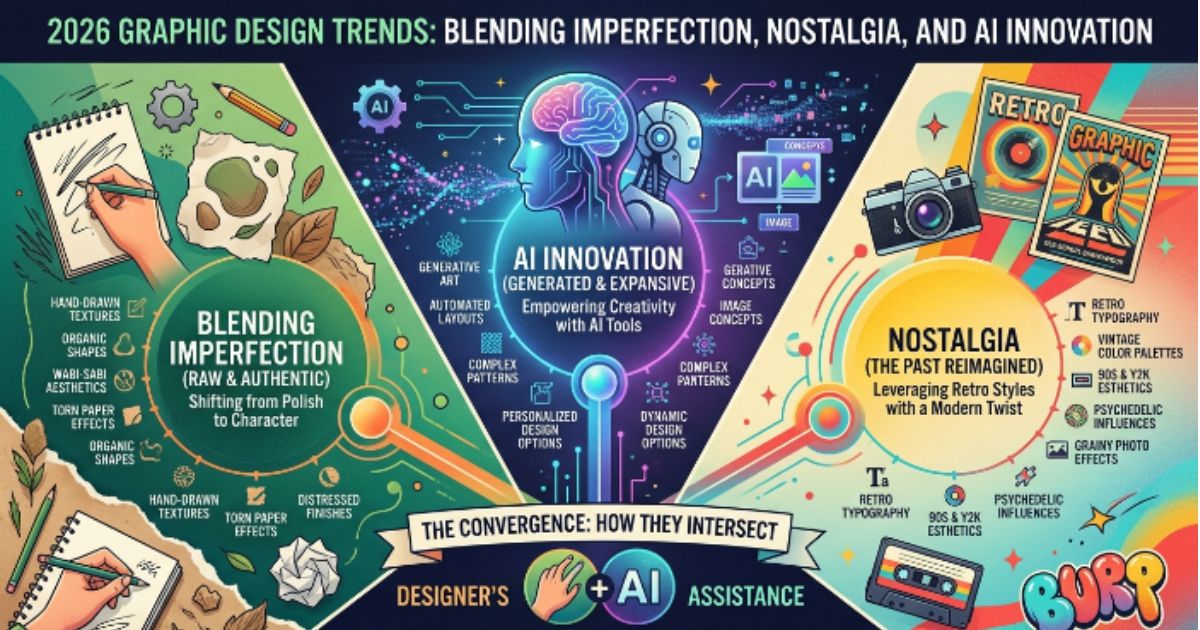
Graphic design stands at a crossroads in 2026, shaped by both a return to authenticity and a leap into innovative technology. Designers are continuously seeking new ways to stand out in a crowded marketplace, reinforcing the relevance of embracing realness, emotion, and originality. This shift is evident in the rising popularity of tactile elements, nostalgic references, and the strategic integration of artificial intelligence. For those searching for inspiration and seeing these shifts in action, creative platforms showcasing graphic design ideas have become essential resources.
The visual landscape is evolving rapidly, forcing both seasoned professionals and newcomers to rethink foundational design approaches. Authenticity and relatability are the driving forces influencing how visual stories are being told, while technology refines the process without erasing the human touch. By staying ahead of these trends, designers can better connect with audiences yearning for sincerity and fresh perspectives.
Modern graphic design is more than just aesthetics. It is a meaningful blend of cultural relevance, technical prowess, and the courage to experiment with imperfect visuals. Whether it is large agency work or independent creatives, 2026’s trends signal a vibrant future for visually impactful storytelling. Embracing new directions not only enhances personal portfolios but also drives the visual identity of brands and products.
As agencies and freelancers look for ways to bring more innovation and personality into their projects, studying these new trajectories and understanding the psychology behind current movements is crucial. Graphic design is no longer just about what looks good. It is about what feels authentic to the viewer, making it vital for designers to be both adaptive and visionary.
Embracing Imperfection and Authenticity
Perfectionism is taking a backseat as “Imperfect by Design” becomes a powerful current in the tide of graphic design. Technology brought us crisp, flawless imagery, but audiences are now gravitating towards more organic, less manufactured aesthetics. The marks of the designer’s hand, rough sketches, uneven textures, and visible brushstrokes are being celebrated for their storytelling capacity. The raw, DIY approach is evidence of a broader societal movement toward vulnerability and genuine self-expression. Research from Canva’s 2026 Design Trends Report noted a staggering 90 percent increase in searches for DIY-inspired visuals, capturing the public’s desire for more relatable, approachable content.
This movement towards imperfection is also a response to an overabundance of ultra-polished digital visuals that can sometimes feel lifeless. Hand-drawn illustrations, candid photography, and undone details are infusing design work with warmth and relatability. These techniques give brands more human qualities, fostering stronger emotional connections with their audiences and actively differentiating them from competitors who stick to impersonal, mass-produced graphics.
Tactile and Human-Centric Designs
Handmade and tactile design is enjoying a vigorous revival. As automation and digital perfection saturate the industry, designers are pushing back with physical elements, ripped paper, paint strokes, fabric textures, and analog photographic filters. “Anti-AI Crafting” engages specifically with materials and techniques that machines struggle to authentically replicate, conveying both uniqueness and nostalgia. According to Creative Bloq’s 2026 Graphic Design Trends, this approach delivers a kind of visual warmth that algorithm-driven outputs frequently lack.
These tactile elements are more than superficial flourishes. They create layered, immersive experiences by inviting viewers to recall real-world sensations. Whether designers employ hand-cut paper collages or scanned sketches, the intent remains the same: to counter digital sterility with palpable, human-centric visuals. This is a trend that encourages deeper emotional responses and engagements, helping brands forge a more personal, enduring connection with their audiences.
Retro and Nostalgic Elements Reimagined
Retro is no longer about simple replication. Designers are taking beloved motifs from the 1980s, 90s, and early 2000s, remixing them with modern digital tools to create visuals that are both familiar and strikingly fresh. This trend infuses contemporary projects with playfulness, leveraging nostalgia without sacrificing modern sensibilities. Resourceful layouts, updated color palettes, and subtle 3D effects are helping to turn past influences into forward-thinking assets.
While nostalgia can be a strong emotional hook, the most compelling examples take risks. By combining retro aesthetics with unexpected elements or experimental compositions, designers refresh collective memories and carve out new visual language for current audiences. This mashup invites participation from people of all ages, fueling engagement and brand recall.
Bold Minimalism
Minimalism is maturing. Where minimalist design traditionally championed understated elegance and functional simplicity, 2026’s creative leaders are making room for high-impact choices. Vibrant colors, oversized typography, and dramatic negative space are being strategically employed to break the monotony. It is no longer just about what is removed; it is equally about what remains and how it commands attention. Reports like Adobe’s minimalist design guide highlight the staying power of this principle, while also pointing out the trend’s evolution toward more dynamic storytelling.
Well-executed bold minimalism offers clarity and visual punch. On crowded platforms and feeds, this fusion of restraint and statement-making design ensures messages are clear, memorable, and visually exciting. The result is brand communication that is simple but never stale, allowing identity and narrative to shine.
Integration of AI in the Design Process
Artificial Intelligence is revolutionizing workflows, enabling designers to focus on innovation rather than repetition. AI-powered tools streamline brainstorming, automate tedious tasks, and offer rapid prototyping capabilities. Instead of replacing creative talent, these technologies act as collaborative partners, freeing up time for complex ideation and experimentation. Insights from recent research, including the study Exploring Utilization, Challenges, and Future Directions of AI-Generated Image Tools in Graphic Design show that this synergy results in more dynamic, adaptable, and personalized design outputs.
Efficient AI-supported collaboration nurtures creativity at scale. Teams can workshop ideas fluidly, iterate quickly, and respond to feedback with unprecedented agility. With AI managing the routine, designers enjoy greater autonomy to invent, strategize, and elevate their visual work, ensuring that technological progress becomes a catalyst rather than a constraint.
Conclusion
The graphic design landscape in 2026 is an exciting convergence of imperfection, tactile richness, curated nostalgia, bold minimalism, and cutting-edge AI integration. By internalizing and applying these trends, designers position themselves at the forefront of their field, creating compelling, emotionally resonant visuals that captivate audiences and define brand identities for the future.
People Also Read: Jessica Alba Net Worth: How Much Is the Actress and Entrepreneur Worth in 2026?

Welcome to Blessings There! I’m the creator and author behind this website. I love sharing useful insights, informative content, and knowledge that can add value to everyday life.