

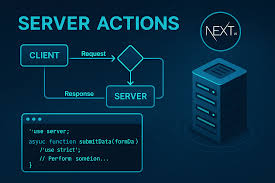
Businesses need web applications that are fast, dependable, and simple to manage. But long build cycles, bulky backend work, and too many disconnected APIs can slow everything down. That is why Next.js Server Actions are getting noticed by teams that want a cleaner, quicker way to build modern web applications.
Next.js Server Actions make it easier to handle server-side tasks without adding too much complexity to the application. Developers can manage backend logic closer to the user flow, which helps improve speed, security, and overall performance. For growing businesses, this means smoother digital experiences and web platforms that are easier to scale over time.
Why Next.js Server Actions Matter in Modern Node.js
Node.js is trusted for building fast, flexible, and scalable web applications. It supports APIs, real-time updates, server-side rendering, microservices, and cloud-based platforms without making the development setup too rigid.
As web products grow, teams often deal with too many layers between the frontend and backend. Forms, database updates, login flows, and server tasks usually need separate API routes, which can slow down delivery.
Next.js server functions reduce this extra work by keeping backend actions closer to the application flow. Developers can handle smaller server-side tasks without creating a separate API layer for every update.
Why This Matters for Growing Businesses:
For a business, this is not just a developer-friendly feature. It can improve:
- Development speed
- Application performance
- Code maintainability
- Security control
- User experience
- Long-term scalability
When companies invest in Node js web development services, they are usually looking for faster delivery and stable application growth. Server Actions support both.
How Server Actions Simplify Backend Workflows
- Handles form submissions with simpler setup and fewer delays.
- Keeps backend logic close to each user action and its result.
- Reduces repeated code across daily backend workflows clearly.
- Makes contact forms easier to build, test, and update faster.
- Supports safer database updates from the server side safely.
- Simplifies admin edits, dashboard changes, and approvals.
- Helps teams manage user profile updates with far less effort.
- Improves order updates through clean server-side logic daily.
- Makes CMS workflows easier to manage, maintain, and scale up.
- Supports faster builds for growing startups and enterprises.
Why Businesses Prefer Faster Full-Stack Development
Fast delivery matters in every digital project. When a web product takes too long to launch, it can delay campaigns, affect customer interest, and slow down revenue plans. Teams need a development approach that helps them release faster without making the code difficult to manage.
Next.js action-based workflows make this easier by bringing frontend and backend work closer together. Developers spend less time creating repeated backend setups and more time improving features, user journeys, and performance. For businesses, this also means better cost control and smoother project timelines.
Business value of faster builds:
- Products reach the market sooner.
- Teams spend less time on boilerplate code.
- Features can be tested and improved faster.
- Maintenance becomes easier over time.
- User feedback can be added quickly.
This is why many businesses are now connecting Next.js with modern Node.js application development.
How Server Actions Improve Performance and Security
Server-side actions help businesses improve both speed and security by keeping important tasks closer to the backend. This makes user flows smoother, reduces extra client-server steps, and gives developers better control over sensitive operations.
- Sensitive logic stays on the server, away from browser-side risks now.
- Database updates are easier to control with server-side checks daily.
- Forms can be checked before data reaches the main database safely now.
- Fewer API routes reduce common attack entry points in modern web apps.
- Authentication checks stay closer to protected backend logic each day.
- Business rules stay safer inside the server environment for each user.
- Server-side handling helps dashboards respond with fewer delays daily.
- Error handling is cleaner when actions run on the server safely today.
Server-side actions help teams build safer flows, reduce delays, and protect key backend logic well.
Role of Node.js in Scalable Web Application Builds
Node.js continues to play a major role in scalable web development because it handles high traffic, API communication, real-time updates, and backend services effectively. When combined with Next.js, it becomes even more useful for full-stack web applications.
Next.js adds strong features like server-side rendering, routing, caching, image optimization, and server components. Node.js supports the backend runtime that helps many of these capabilities work smoothly.
Where this combination works well:
- SaaS platforms
- B2B dashboards
- E-commerce portals
- Customer support systems
- Booking platforms
- Enterprise web apps
- Data-driven applications
Businesses working with Next.js development services can use this stack to build modern web platforms with better speed, structure, and scalability.
Building Future-Ready Enterprise Apps with Node.js Services
Enterprise applications must stay fast, safe, and ready to grow with changing business needs. With Node js web development services, Pattem Digital helps businesses use Server Actions to keep backend work simple and close to the user journey. This makes dashboards, approvals, forms, database updates, and customer actions easier to handle.
Through this service, Pattem Digital provides:
- Scalable Node.js web application development
- Next.js Server Actions implementation
- Secure backend workflow setup
- API and database integration
- Performance-focused web architecture
- Enterprise dashboard and portal development
Pattem Digital builds web platforms that stay reliable today and ready for future growth.
