

Introduction
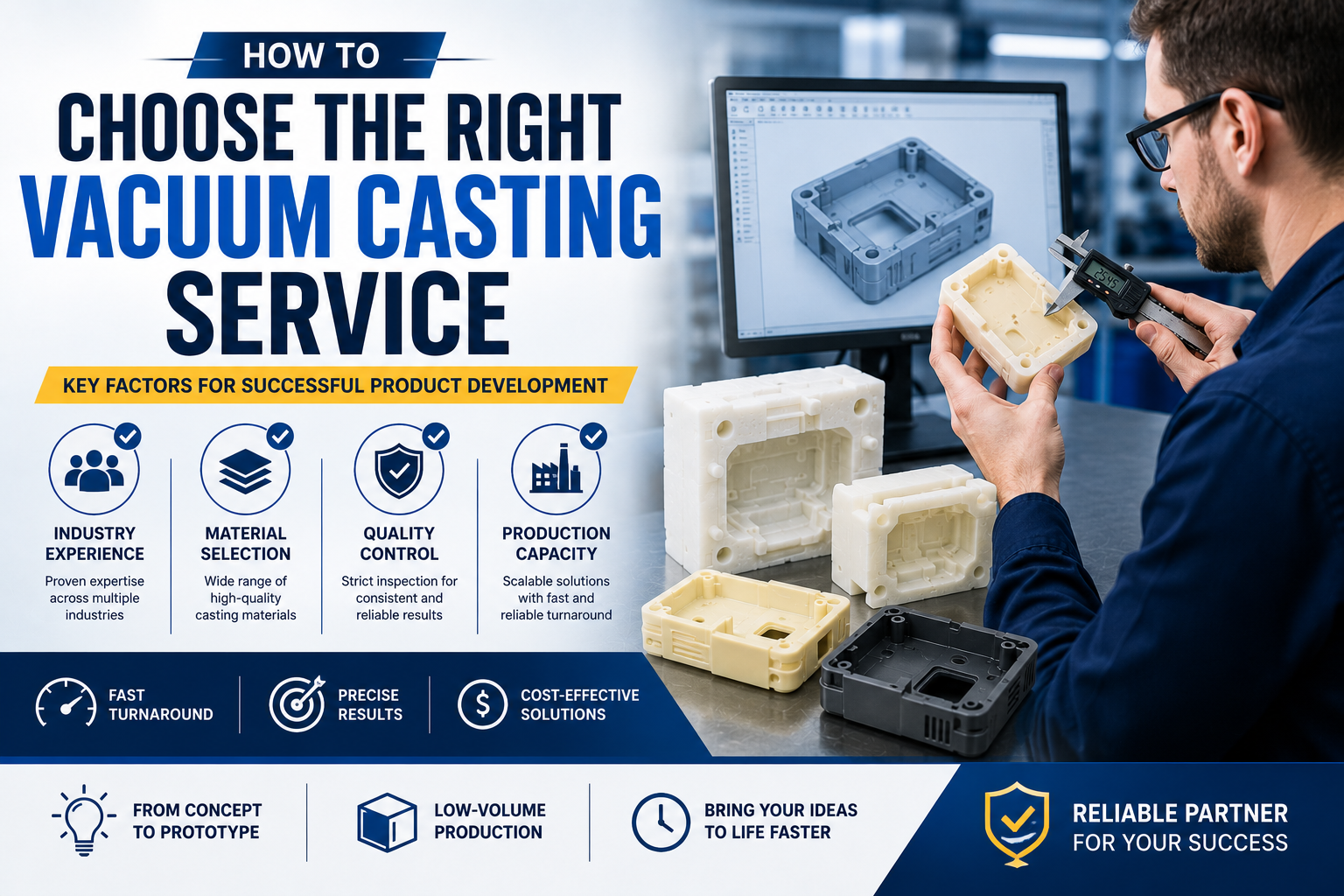
Selecting the right manufacturing partner can make a significant difference in the success of your product development process. Whether you need functional prototypes, market-testing samples, or low-volume production parts, choosing the right vacuum casting service ensures high-quality results, faster turnaround times, and cost-effective manufacturing.
Vacuum casting is widely used across industries because it can produce highly accurate parts with excellent surface finishes while keeping tooling costs low. However, not every supplier offers the same level of expertise, material options, or quality standards. Understanding how to evaluate a vacuum casting provider can help you avoid delays, reduce production risks, and achieve better project outcomes.
In this guide, we’ll explore the most important factors to consider when choosing a vacuum casting service for your project.
Why Choosing the Right Vacuum Casting Service Matters
The quality of your manufacturing partner directly affects the quality of your final product. An experienced supplier can help streamline development, improve product performance, and reduce costly mistakes.
A professional vacuum casting provider can offer:
- Consistent part quality
- Faster production timelines
- Better material recommendations
- Reliable technical support
- Improved manufacturing efficiency
Choosing the right supplier from the beginning can save both time and money throughout the product development cycle.
Evaluate Industry Experience
Look for Relevant Manufacturing Expertise
Experience is one of the first factors you should consider when comparing suppliers. Manufacturers with extensive vacuum casting experience are better equipped to handle complex designs and challenging production requirements.
A supplier that regularly works with industries such as automotive, aerospace, medical devices, and consumer electronics will likely have stronger technical capabilities.
Review Previous Projects
Ask for case studies, production samples, or examples of previous work. Reviewing a supplier’s portfolio can help you understand their capabilities and determine whether they can meet your project requirements.
Check Material Options
Availability of Production-Like Materials
One of the biggest advantages of vacuum casting is the ability to replicate the properties of production-grade plastics.
Common material options include:
- ABS-like materials
- Polypropylene-like materials
- Rubber-like materials
- Transparent resins
- Heat-resistant materials
A supplier with a wider range of materials can provide greater flexibility for product testing and validation.
Material Consistency
Consistent material quality is essential for achieving reliable performance and accurate test results. Always ask suppliers about their material sourcing and quality control procedures.
Assess Production Capacity
Can They Handle Your Volume Requirements?
Some manufacturers focus only on prototyping, while others offer both prototyping and low-volume production services.
Before choosing a supplier, determine whether they can support your required production quantities while maintaining quality standards.
Turnaround Times
Fast delivery is often critical during product development. Ask suppliers about:
- Mold creation timelines
- Prototype production schedules
- Low-volume manufacturing lead times
- Rush order availability
Reliable lead times help keep projects on schedule and prevent costly delays.
Evaluate Quality Control Standards
Inspection Processes
A trustworthy vacuum casting service should have strict quality control procedures to ensure every part meets specifications.
Quality inspections may include:
- Dimensional verification
- Visual inspections
- Surface finish checks
- Material testing
- Functional evaluations
Strong quality control reduces the risk of defective parts and production issues.
Consistency Across Multiple Parts
If you require multiple units, consistency becomes extremely important. The supplier should be able to produce parts with uniform dimensions and appearance throughout the production run.
Consider Technical Support and Communication
Engineering Assistance
The best manufacturers do more than simply produce parts. They also provide engineering guidance to help optimize designs and improve manufacturability.
Experienced engineers can recommend:
- Better material choices
- Design improvements
- Cost-saving opportunities
- Production optimizations
Clear Communication
Effective communication helps prevent misunderstandings and keeps projects moving smoothly. Choose a supplier that provides timely updates and responds quickly to questions.
Compare Pricing Carefully
Focus on Value Rather Than Cost Alone
While budget is important, selecting the cheapest supplier can sometimes lead to quality problems and project delays.
When evaluating quotes, consider:
- Material quality
- Production capabilities
- Technical expertise
- Lead times
- Customer support
The best value often comes from suppliers that balance quality, reliability, and cost efficiency.
Questions to Ask Before Choosing a Vacuum Casting Supplier
Before making a final decision, consider asking these questions:
What industries do you specialize in?
Industry-specific experience can improve production outcomes.
What materials do you offer?
Material selection affects product performance and durability.
What are your typical lead times?
Understanding timelines helps with project planning.
What quality control procedures do you use?
Quality assurance is essential for reliable manufacturing.
Can you provide production samples?
Samples allow you to evaluate workmanship and quality standards.
Common Mistakes to Avoid
Many companies make avoidable mistakes when selecting a vacuum casting partner.
Choosing Based Only on Price
Low-cost providers may not always deliver consistent quality.
Ignoring Material Capabilities
The wrong material can negatively impact product performance.
Overlooking Quality Control
Weak inspection procedures often result in inconsistent parts.
Failing to Verify Experience
Manufacturers with proven expertise are more likely to deliver successful results.
Not Discussing Lead Times Early
Unexpected delays can disrupt product development schedules.
Benefits of Working with a Professional Vacuum Casting Service
Partnering with an experienced vacuum casting service provider offers numerous advantages throughout the product development process.
These benefits include:
- Faster prototype production
- Lower tooling costs
- High-quality surface finishes
- Accurate design validation
- Efficient low-volume manufacturing
A professional supplier can help businesses reduce development risks while accelerating time-to-market.
Conclusion
Choosing the right vacuum casting supplier is a critical step in ensuring the success of your product development project. By evaluating experience, material options, production capabilities, quality control systems, and customer support, businesses can make informed decisions and avoid costly manufacturing mistakes.
A reliable vacuum casting service not only produces high-quality parts but also provides valuable technical expertise that can improve product performance and streamline development. Taking the time to select the right manufacturing partner can lead to better results, faster production, and long-term project success.
FAQs
What is a vacuum casting service?
A vacuum casting service is a manufacturing process that uses silicone molds and polyurethane resins to create high-quality prototypes and low-volume production parts with excellent detail and surface finish.
Why is vacuum casting popular for product development?
Vacuum casting offers lower tooling costs, faster turnaround times, and high-quality prototype production, making it ideal for product testing and validation.
How do I choose the best vacuum casting supplier?
Look for experience, material options, quality control procedures, production capacity, technical support, and reliable lead times when selecting a supplier.
What industries commonly use vacuum casting?
Industries such as automotive, aerospace, medical devices, consumer electronics, and industrial manufacturing frequently use vacuum casting for prototyping and low-volume production.
How long does vacuum casting production take?
Most vacuum casting projects can be completed within a few days to a few weeks, depending on the complexity of the design and production volume.
