

Shilajeet has been used in Ayurvedic medicine for centuries. Not decades. Centuries. And yet, somehow, it is still considered a “discovery” by the wellness crowd every few years. People in Himalayan communities have been taking it long before it started showing up in supplement stores and search results.
So what changed? Why is everyone looking for shilajeet online now?
Partly it is the fitness culture boom. Partly it is growing distrust of synthetic supplements. But mostly, people are figuring out that this old-school resin actually has science behind it. That is a rare thing in the supplement world.
This guide is for anyone starting from scratch. No jargon, no inflated promises. Just what shilajeet is, what it does, how to take it, and what to look for when you buy it.
What is shilajeet?
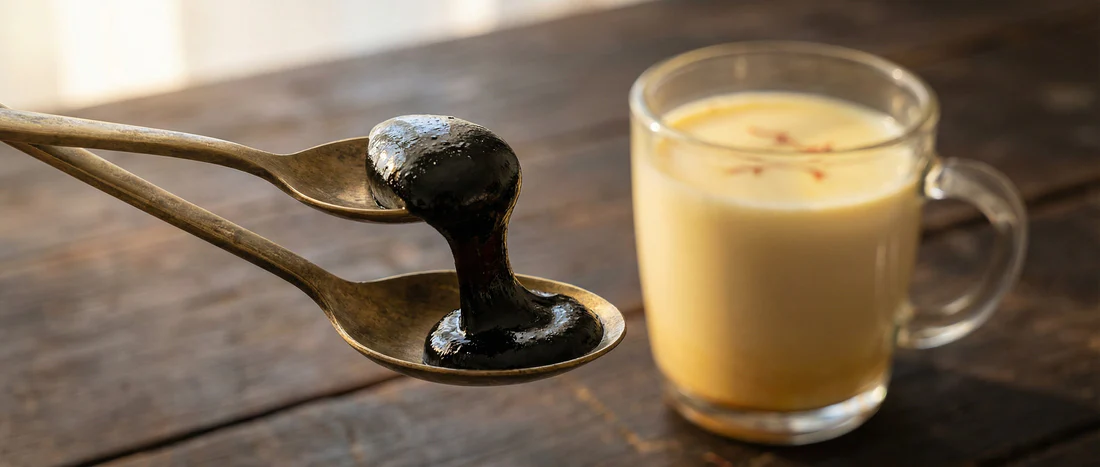
Shilajeet is a dark, sticky resin. Think of it like tar, but natural and far more useful. It forms over hundreds of years inside mountain rock layers, as decomposed plant matter gets compressed by heat and pressure. During warmer months, this resin slowly seeps through rock cracks. It is then collected, purified, and packaged.
Nothing about it is synthetic. The “manufacturing” is done by the mountain.
Where it comes from matters a lot. Himalayan shilajeet, collected above 16,000 feet, is generally considered stronger and purer than versions from lower altitudes. Okami shilajeet, sold through Wellversed, is sourced at 18,000 feet in the Himalayas. That altitude matters because the mineral concentration and fulvic acid content tend to be higher up there.
Fulvic acid is the key compound in shilajeet. It is what separates this resin from just eating a handful of mineral tablets. More on that in the next section.
Why fulvic acid is the part that actually matters
Here is a problem most people don’t know they have. You can eat a diet full of iron, zinc, and magnesium and still be deficient. The issue isn’t always what you eat. It is what your body actually absorbs. Minerals often pass through the gut without being taken up properly.
Fulvic acid changes that. It binds to minerals and carries them into your cells more efficiently. So shilajeet doesn’t just add nutrients. It helps your body use what it’s already getting.
Beyond absorption, fulvic acid has well-documented antioxidant and anti-inflammatory properties. A 2012 paper in the Journal of Alzheimer’s Disease found that fulvic acid can block the buildup of tau proteins in the brain. Tau protein clumping is one of the processes linked to Alzheimer’s progression. That is a meaningful finding, though researchers are clear that more human trials are needed before drawing clinical conclusions.
Still, for a compound found in a natural resin, that is a notable finding.
What shilajeet may help with
- Energy and less fatigue
Most people who start taking shilajeet mention energy as the first thing they notice. Not a jolt of energy like coffee. More like a steadier, less-tired feeling throughout the day.
A 2012 study in the Journal of the International Society of Sports Nutrition looked at purified shilajit supplementation in physically active men. The results showed better muscle strength maintenance and lower fatigue markers. The explanation points to mitochondria, the parts of your cells that generate energy. Shilajeet appears to support how well they function. When mitochondria run better, tiredness drops.
- Stamina and workout performance
This is likely why shilajeet has become a regular addition for gym-goers. A double-blind, placebo-controlled study by Keller et al. in 2019 had healthy adults take 500 mg of purified shilajit daily for eight weeks. Compared to the placebo group, they showed noticeably better muscle strength and faster recovery.
That is why Wellversed’s Okami shilajeet is positioned as a performance and stamina booster. It is not just marketing. The research supports it.
- Inflammation
Chronic, low-level inflammation is behind a wider range of health issues than most people realise. Joint pain, skin flare-ups, blood sugar instability, persistent fatigue. Many of these are worsened by ongoing inflammation. The fulvic acid in shilajeet has anti-inflammatory action that may help reduce this background load on the immune system over time.
Shilajeet doesn’t treat inflammatory conditions. But as a daily supplement, it may take some pressure off.
- Bone health
Women lose bone mineral density more rapidly after menopause due to falling estrogen levels. Some early-stage research points to shilajeet possibly helping slow this. It is not a substitute for medical treatment of osteoporosis. But as part of a daily wellness routine, it may contribute to better bone support alongside diet and exercise.
- Gut health
Fulvic acid also supports the gut microbiome, the collection of bacteria in your digestive tract. These bacteria influence how well you absorb nutrients, how your immune system behaves, and even your mood. Shilajeet use has been associated with higher digestive enzyme activity, which means your gut processes food more effectively.
- Brain and ageing
Older adults may get the most from shilajeet’s cognitive support angle. Oxidative stress in brain cells is one of the drivers of age-related cognitive decline, and fulvic acid has been studied for its ability to reduce this. Smaller studies have also noted better sleep and appetite in older individuals who took shilajeet consistently.
How to take it
Getting this part right matters. Resin is not the same as a capsule or powder. It is more concentrated. A little goes a long way.
Start with a tiny amount. In the first week, use about 0.5 g per day, which is roughly the size of a small pea. After that first week, you can increase to 1 g if you want. Most research uses doses of 200 mg to 500 mg daily. Okami’s recommendation is 500 mg once a day, and that is a sensible amount to stick to.
Do not dissolve it in cold water. It will not mix properly. Use about 200 ml of warm water or warm milk, stir well, and drink once it is fully dissolved. There is nothing complicated about it. It just needs warmth to dissolve.
Morning works for most people. The energy and focus effects are more useful during the day. If you are taking it mainly for recovery or better sleep, before bed works too. Pick whichever fits your routine and stick to it. Consistency is what produces results, not the specific time of day.
Which form to choose
Wellversed’s Okami range comes in three forms, and they are not all the same experience.
The resin jar is the classic choice. A 20g jar gives you about 40 daily servings. It has nothing added, highest fulvic acid concentration, and the most economical cost per dose. If you don’t mind the preparation step, this is what most people should start with.
The drops are pre-dissolved shilajeet in liquid form. No heating or stirring. Good for travel or a faster morning routine. You add them to water or take them directly.
The honey sticks combine 500 mg of shilajeet with natural raw honey per stick. If the earthy, slightly bitter taste of plain shilajeet puts you off, this is the one to try. Honey softens the flavour and adds its own mild antibacterial properties on top.
Who should not take it
Most healthy adults can take shilajeet safely. It works for both men and women. The “only for men” framing that some brands use doesn’t hold up.
But there are real exceptions. Do not take it if you have sickle cell anaemia, hemochromatosis, or thalassemia. These conditions involve iron processing issues or red blood cell abnormalities, and the mineral content in shilajeet can worsen things. Pregnant or breastfeeding women should avoid it until they have spoken with a doctor. If you’ve had an allergic reaction to shilajeet before, don’t try it again without medical advice.
For everyone else, the risks are low when you buy a properly tested product and stick to recommended doses.
How long until it works
This varies more than people expect. Some notice more energy within the first few days. Others take eight to twelve weeks to feel a clear difference. Research suggests meaningful results with consistent use show up somewhere between 8 and 48 weeks, depending on what you are taking it for.
Don’t make the mistake of treating shilajeet like a pre-workout. It doesn’t give you an immediate hit. The benefits build up gradually with regular use, which is actually how most Ayurvedic supplements are supposed to work. Give it at least two to three months before deciding whether it is working for you.
What to look for when buying shilajeet online
The market for shilajeet online is full of low-quality products. Some are diluted. Some are sourced from low altitudes where mineral content is poor. Some skip lab testing entirely.
A few things to check before buying anything. First, where is it sourced from? High-altitude Himalayan shilajeet, above 16,000 feet, is more concentrated. If a brand doesn’t mention source altitude, that is usually a bad sign. Second, is it third-party lab tested? This is non-negotiable. Lab testing confirms fulvic acid content and rules out heavy metal contamination. Unprocessed shilajeet can carry lead, arsenic, and other contaminants. You need the testing certificate to be sure. Third, check the packaging. UV light breaks down shilajeet over time. Good products come in UV-protected dark containers. Okami uses a UV-protected black jar for exactly this reason. Fourth, look at the price. Pure, properly sourced shilajeet costs money to produce. If a product is priced unusually low, it is worth asking why.
Combining shilajeet with other supplements
If you are also doing strength training, shilajeet pairs well with creatine. Creatine supports short-burst power and muscle recovery in the immediate sense. Shilajeet supports longer-term energy and reduces oxidative stress that builds up from training. The two do different things, which is why combining them makes sense.
Wellversed sells combo packs of Okami Shilajeet with Wellcore Creatine. For anyone training seriously, this is a practical combination worth considering. Shilajeet also works alongside a pre-workout, where it functions as a background support rather than an acute stimulant.
The bottom line
Shilajeet is one of the few Ayurvedic supplements that has real research behind it. Not all the claims are fully proven, and more human trials are needed in some areas. But the core benefits, energy support, reduced fatigue, anti-inflammatory effects, better nutrient absorption, are backed by studies.
It is not a magic product. It works as part of a daily routine. Start with 500 mg in warm water or milk. Take it every day. Buy from a lab-tested, verified source. Give it two to three months. And if you have any existing health conditions, check with your doctor before starting.
