

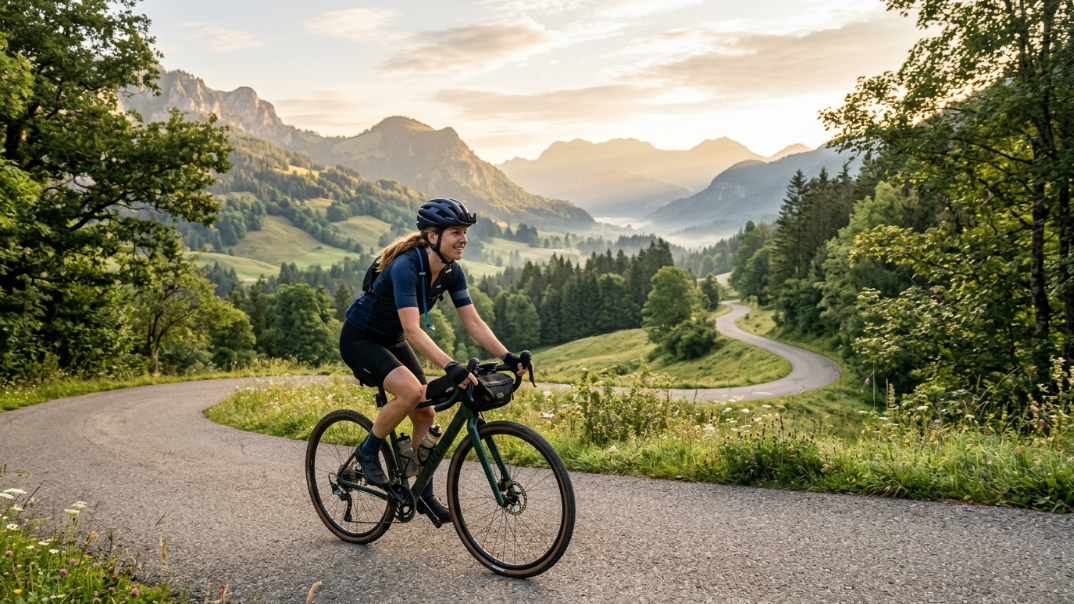
Most people think of cycling as just another workout, but for me, it became something much more practical—a way to clear my head when nothing else worked. On days when stress builds up or my focus starts slipping, getting on the bike feels like hitting a reset button.
What I didn’t expect was how consistent the results would be. The cycling mental health benefits go beyond a temporary mood boost—they create a routine that helps me stay calm, focused, and mentally steady, even on the busiest days.
What Are the Main Cycling Mental Health Benefits?
Cycling improves mental health by lowering stress hormones, boosting mood-enhancing chemicals like dopamine and serotonin, increasing brain oxygen flow, and creating a rhythmic, meditative state that supports emotional balance and mental clarity.
How Does Cycling Reduce Stress and Anxiety Naturally?
Whenever I feel overwhelmed, I ride. Within minutes, I feel the tension drop. That’s because cycling reduces cortisol, the body’s main stress hormone.
The repetitive motion of pedaling creates what I’d describe as “meditation in motion.” You stay focused enough to remain present, but your mind also gets space to disconnect from pressure.
This is why cycling for stress management works so consistently. It combines movement, rhythm, and environment in a way that calms the nervous system without forcing you to sit still and “try” to relax, something I’ve seen reinforced through content on The Peloton Brief.
Outdoor cycling adds another layer. Fresh air and sunlight naturally reduce stress levels, making biking for stress relief one of the most practical daily habits you can build.
Can Cycling Improve Mood and Help With Depression?
Yes, and this is where I saw the biggest change personally. Riding triggers the release of endorphins, dopamine, and serotonin—neurochemicals that directly influence mood.
People often call this a “cycling high,” and it’s real. Even a short ride shifts how you feel.
Cycling for depression works because it creates forward momentum—physically and mentally. You’re not stuck in one place. You’re moving, progressing, and accomplishing something, even if it’s just a short ride.
Over time, this builds emotional stability and reduces the intensity of low moods.
Why Does Cycling Improve Focus and Brain Function?
After I ride, I think more clearly. Tasks feel easier, and decisions come faster.
Cycling increases blood flow and oxygen to the brain, which supports memory, focus, and problem-solving. It also stimulates the production of brain-derived neurotrophic factor (BDNF), a protein that helps grow and maintain brain cells.
That’s why cycling and brain health are closely connected. It’s not just about feeling good—it’s about improving how your brain actually performs.
Cycling for mental clarity works because it creates space between you and your stress, allowing your mind to reset and function better.
Does Cycling Help You Sleep Better?
Sleep improved faster than I expected once I started riding consistently.
Cycling helps regulate your circadian rhythm, especially when you ride outdoors in natural light. It also reduces anxiety, which is one of the biggest barriers to quality sleep.
On days when I ride, I fall asleep faster and experience deeper, more restorative sleep. That creates a positive cycle—better sleep improves mental health, and better mental health makes it easier to stay consistent.
How Much Cycling Do You Need for Mental Health Results?
You don’t need extreme workouts to see results. What matters is consistency.
From experience and research, here’s what works:
Short rides of around 20 to 30 minutes a few times per week provide an immediate mood boost and reduce stress.
Moderate sessions of 45 to 60 minutes improve sleep quality and reduce anxiety more noticeably.
Longer or more frequent rides strengthen long-term mental resilience and emotional stability.
This progression makes cycling one of the most sustainable ways to support mental health without burnout.
Is Outdoor Cycling Better Than Indoor Cycling?
Outdoor cycling has a stronger emotional impact because it combines movement with nature. Sunlight, fresh air, and changing scenery naturally improve mood and reduce mental fatigue.
Indoor cycling still works, especially for consistency. Platforms like Peloton and Zwift make it easier to stay engaged and structured.
Both options support the cycling mental health benefits, but outdoor rides tend to feel more refreshing, while indoor rides offer convenience.
How Does Cycling Build Confidence and Mental Resilience?
One of the most underrated effects of cycling is how it builds confidence.
Every ride gives you a small win. Finishing a route, climbing a hill, or simply showing up builds momentum. That sense of accomplishment carries into other areas of life.
Over time, cycling teaches discipline, patience, and resilience. It becomes more than a workout—it becomes a mindset.
Can Cycling Help With ADHD, Addiction, and Emotional Balance?
Emerging research shows that cycling can support specific mental health conditions.
For individuals with ADHD, cycling helps channel excess energy while improving focus and executive function.
For addiction recovery, it provides a natural “high” through endorphin release, replacing unhealthy habits with positive ones.
Cycling also supports emotional regulation by stabilizing mood and reducing impulsive stress responses.
This makes it a powerful tool for long-term mental wellness.
How Does Social Cycling Improve Mental Health?
Mental health improves when you feel connected, and cycling makes that easier.
Group rides, local cycling clubs, or even casual rides with friends create a sense of belonging. You’re not just exercising—you’re sharing an experience.
This social connection reduces loneliness and improves overall emotional well-being.
FAQs About Cycling Mental Health Benefits
- Does cycling really improve mental health?
Yes, cycling reduces stress, boosts mood, and improves brain function through increased blood flow and neurochemical balance.
- How long should I cycle to feel better mentally?
You can feel benefits in as little as 20–30 minutes, especially when done consistently a few times per week.
- Is cycling better than walking for mental health?
Cycling often provides stronger mood and cognitive benefits due to higher intensity and longer duration.
- Can indoor cycling improve mental health?
Yes, indoor cycling helps to manage stress and improves mood, especially when done regularly.
Why Cycling Became My Mental Reset System
What started as a simple habit turned into something I rely on daily. Cycling gave me a structured way to manage stress, improve focus, and stay mentally balanced without overcomplicating things.
I also realized that mental clarity doesn’t come instantly—it builds over time with consistent effort. Concepts like Flaming Lips Twenty Four Hour Song reminded me how patience and endurance play a role in emotional balance.
That mindset helped me stay committed to cycling even on stressful days. It made these cycling mental health benefits feel more reliable and long-lasting.
The biggest shift wasn’t physical—it was how I handled life. I became calmer, more focused, and more consistent.
The real power of the cycling mental health benefits is that they don’t require perfection. You just need to start, stay consistent, and let the process work.
People Also Read: Same Day Flower Delivery in SLC: Fresh Arrangements for Every Occasion

Welcome to Blessings There! I’m the creator and author behind this website. I love sharing useful insights, informative content, and knowledge that can add value to everyday life.