

The transition from the structured environment of a nursing classroom to the fast-paced, high-stakes reality of a clinical setting is one of the most significant milestones in a healthcare professional’s career. In the United States, nursing is no longer just a vocational practice; it is a sophisticated, evidence-based science. Mastering nursing research is the bridge that connects theoretical knowledge to practical excellence. As healthcare systems become increasingly complex, the ability to synthesize data and apply it at the bedside is what defines a leader in the field.
However, many students find themselves overwhelmed when tasked with the rigorous requirements of a graduate thesis or clinical project. The leap from understanding patient care to conducting high-level academic inquiry requires a specific set of skills. For those struggling with the complexities of methodology or literature reviews, myassignmenthelp offers specialized nursing dissertation help that ensures academic work meets the stringent standards of US clinical boards. Navigating these academic hurdles is essential, as the research conducted today often dictates the protocols used in hospitals tomorrow.
According to the American Association of Colleges of Nursing (AACN), evidence-based practice (EBP) is the cornerstone of modern nursing education. By integrating the best research with clinical expertise and patient values, nurses can significantly improve outcomes. Yet, the journey to mastering this research is fraught with challenges, ranging from selecting a viable topic to managing the massive workload of data collection. For comprehensive support across all subjects, students often seek online dissertation help to maintain their clinical performance while achieving academic success.
Key Takeaways
- Evidence-Based Practice (EBP): Understand that research is the primary driver of patient safety and clinical efficiency in the US.
- Topic Selection: Focus on “gaps in care” to ensure your research has real-world clinical application.
- Methodological Rigor: Mastering both qualitative and quantitative data is non-negotiable for graduate success.
- Time Management: Balancing clinical rotations and dissertation writing requires strategic delegation and professional support.
The Evolution of the Nurse-Researcher
In the past, nursing research was often viewed as an academic exercise reserved for PhD candidates. Today, the “Doctor of Nursing Practice” (DNP) and “Master of Science in Nursing” (MSN) tracks in the US have moved research to the forefront for all advanced practice nurses. Data-driven decision-making is now a daily requirement. Whether it is reducing hospital-acquired infections (HAIs) or improving mental health interventions in rural areas, the modern nurse is as much a scientist as they are a caregiver.
Mastering the PICO(T) Framework
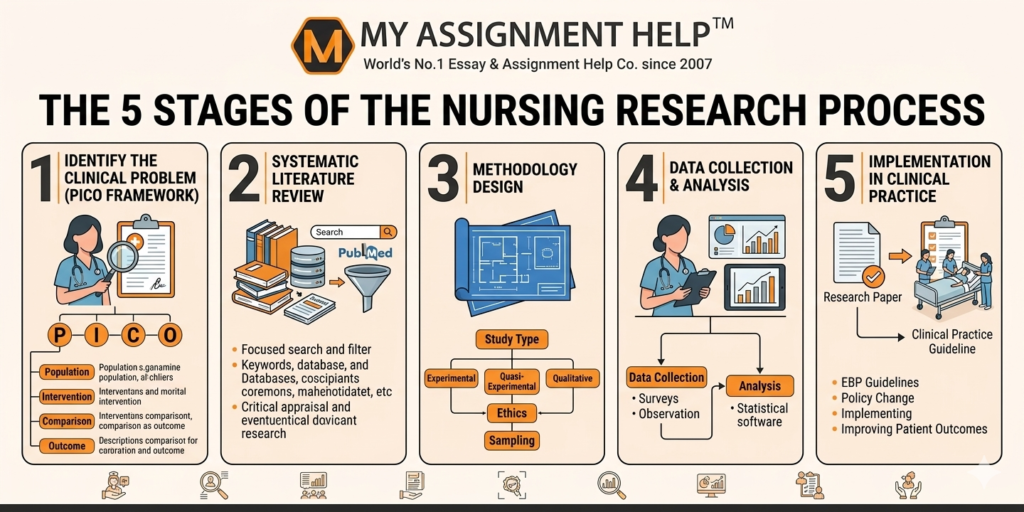
The foundation of any successful nursing research project in the US is the PICO(T) framework. This mnemonic helps researchers narrow their focus to produce actionable results:
- P: Patient/Population (e.g., elderly patients with Type 2 Diabetes).
- I: Intervention (e.g., a new tele-health monitoring system).
- C: Comparison (e.g., traditional in-person care).
- O: Outcome (e.g., reduction in HbA1c levels).
- T: Time (e.g., over a 6-month period).
Research indicates that using a structured framework like PICO increases the likelihood of a study being published and implemented by nearly 40%.
Data-Driven Insights: The Impact of Research on US Healthcare
The United States spends more on healthcare per capita than any other nation, yet health outcomes often lag. Research-led nursing interventions are the solution. For instance, studies on “Nurse-to-Patient Ratios” conducted by academic nurses led directly to legislative changes in states like California, significantly reducing patient mortality rates. This proves that a nursing dissertation is not just a paper—it is a policy tool.
Common Hurdles in Nursing Research
Students often face three primary obstacles: IRB (Institutional Review Board) approval, statistical analysis, and writing fatigue. The IRB process in the US is particularly rigorous to protect patient privacy under HIPAA. Navigating these ethics requirements requires a meticulous approach that many students find daunting without external mentorship or professional academic services.
Frequently Asked Questions (FAQ)
1. Why is research important for a clinical nurse?
Research ensures that the care provided is based on the most current and effective evidence, rather than outdated habits, leading to better patient safety.
2. How do I choose a nursing dissertation topic?
Look for problems you encounter in your clinical rotations. A “gap” between what current research says and what you see in the hospital is usually a goldmine for a topic.
3. Can I get help with my nursing research paper?
Yes, many students utilize professional academic consultants to assist with data analysis, formatting, and literature reviews to ensure they meet university standards.
About the Author: Dr. Sarah Jenkins
Dr. Sarah Jenkins is a Senior Academic Consultant at MyAssignmentHelp with over 15 years of experience in clinical nursing and academic research. Based in the US, she specializes in assisting MSN and DNP students navigate the complexities of evidence-based practice and dissertation methodology. Her work has helped thousands of students transition from the classroom to successful clinical careers.
References
- American Association of Colleges of Nursing (AACN). (2024). The Essentials: Core Competencies for Professional Nursing Education.
- Journal of Advanced Nursing. (2023). Statistical Trends in Nursing Research Methodologies.
- National Institutes of Health (NIH). (2023). Ethics in Human Subject Research: The Role of the IRB.
- Bureau of Labor Statistics (BLS). (2024). Occupational Outlook for Nurse Practitioners and Researchers.
